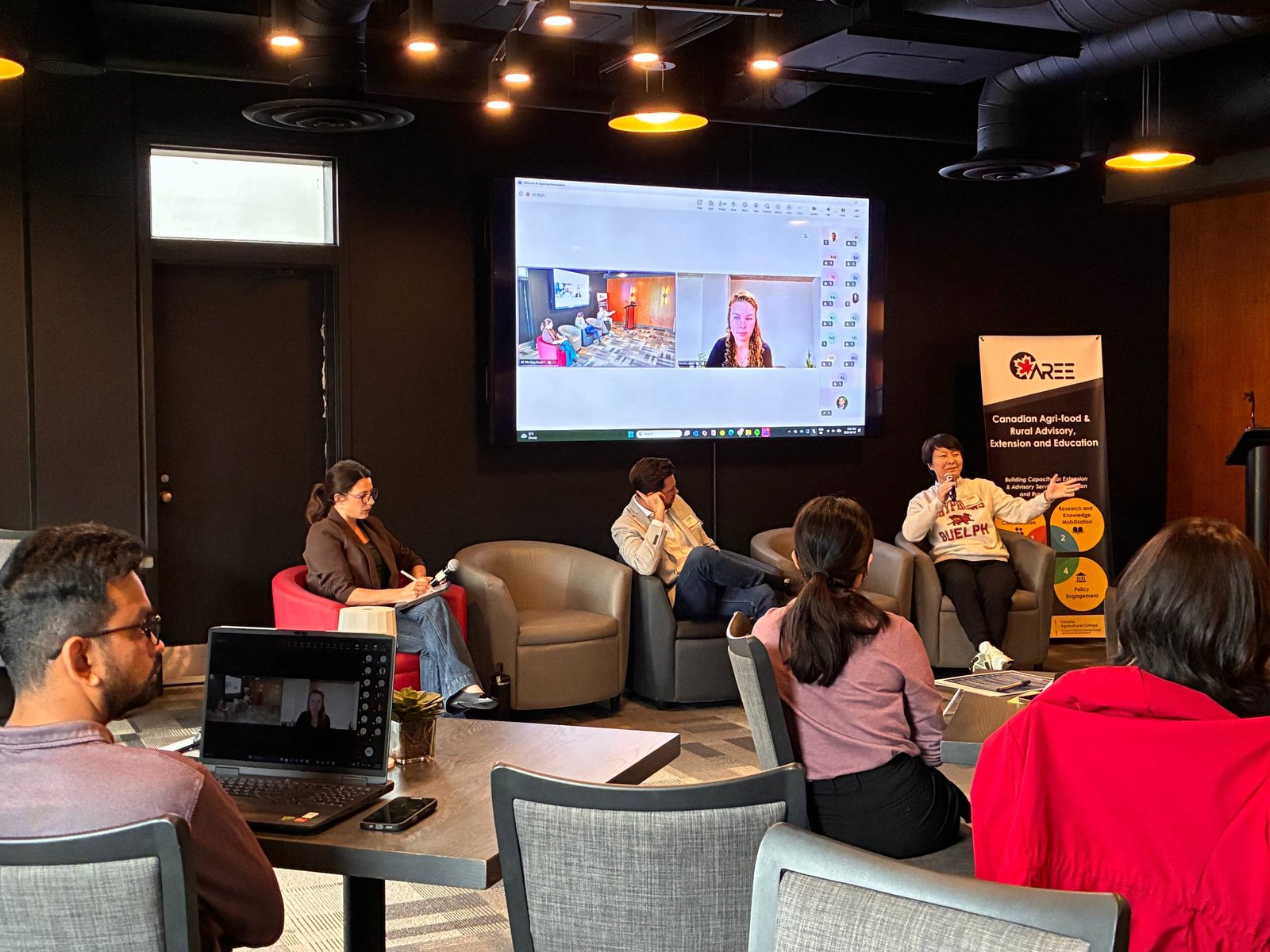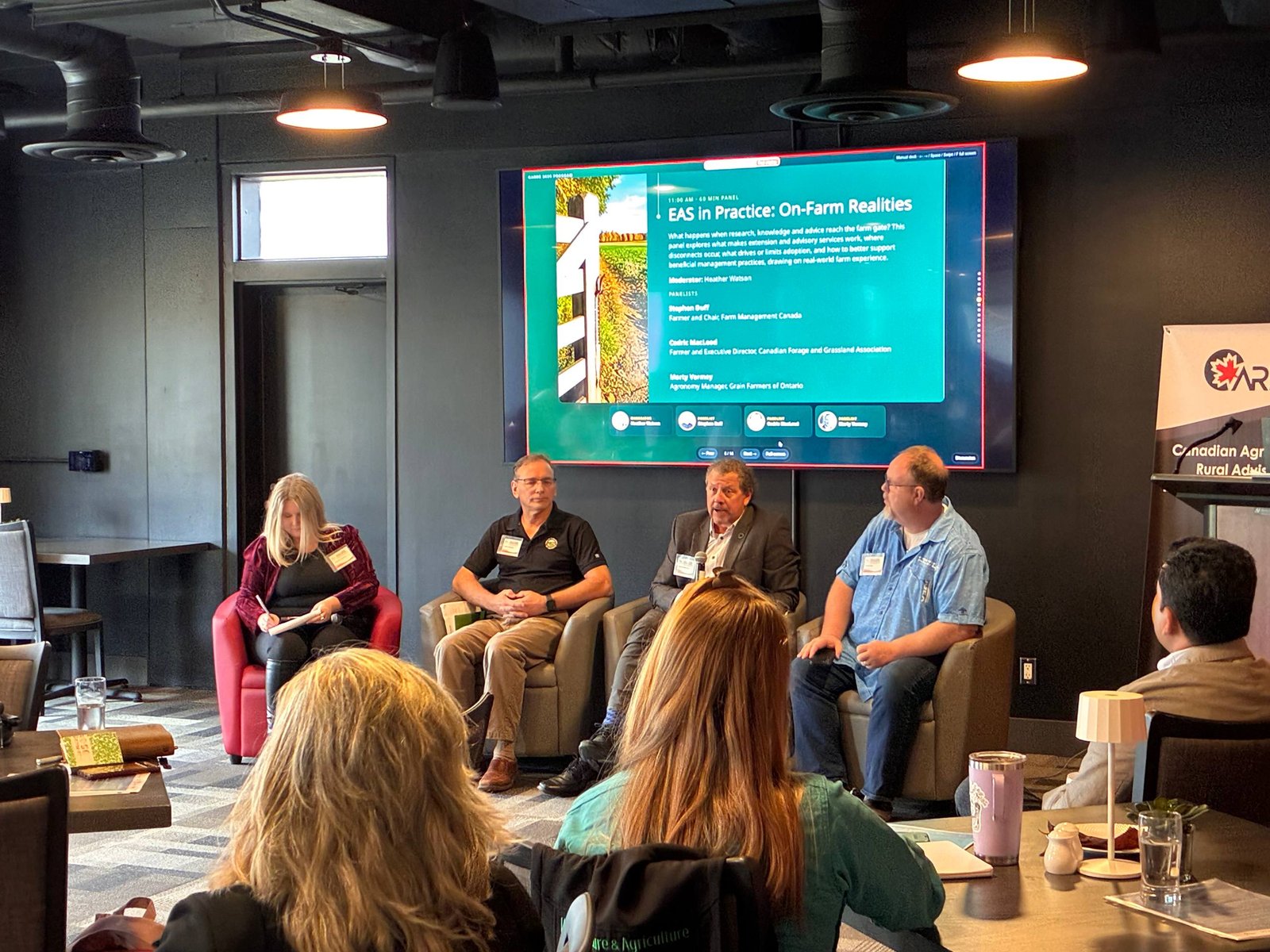
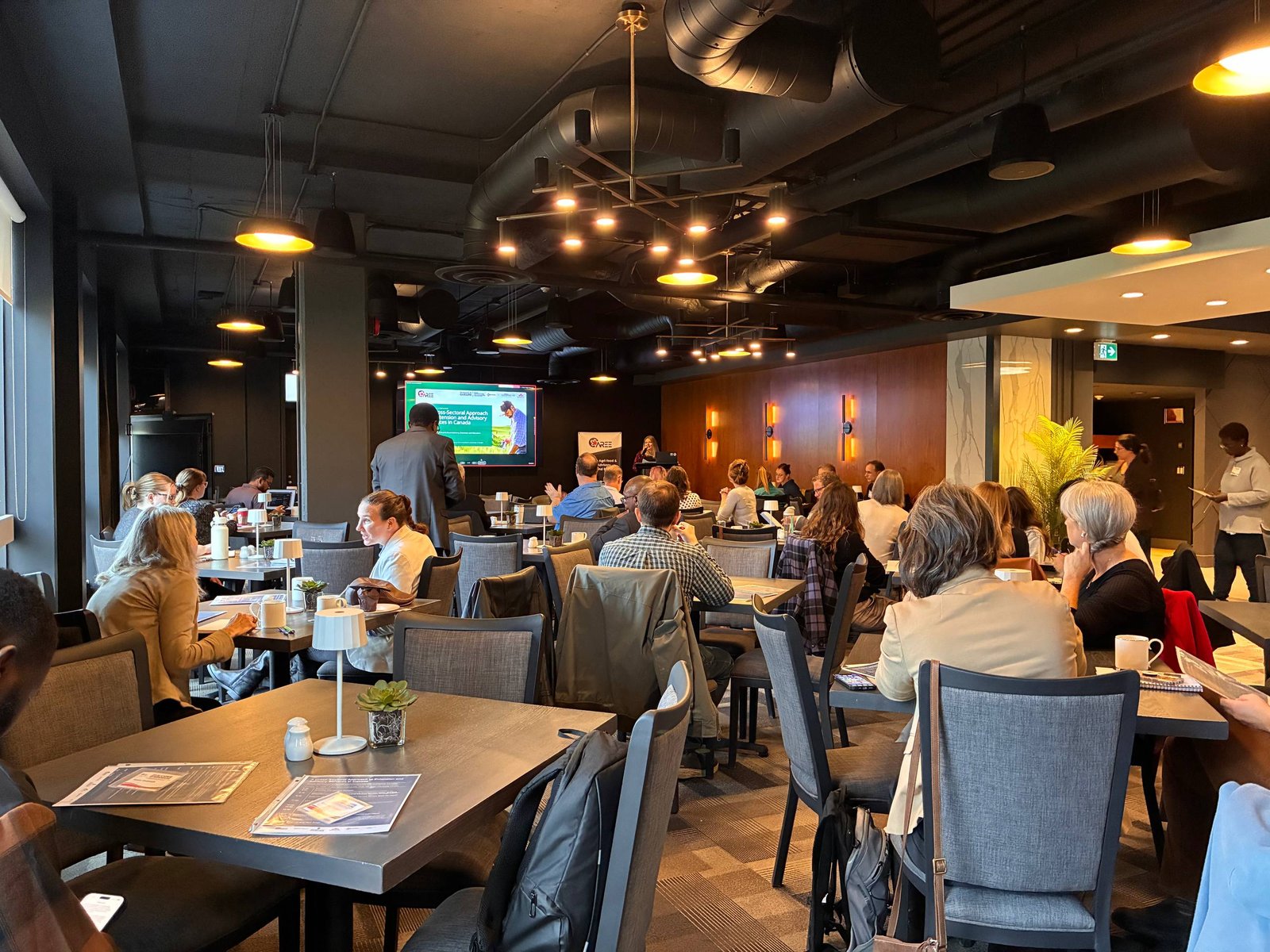
The CAREE 2026 Symposium on Extension and Advisory Services (EAS) officially commenced at 9:00 a.m. at the University of Guelph, bringing together researchers, agricultural professionals, farmers, policymakers, educators, and students to discuss the future of agricultural extension and advisory services in Canada.
Following registration and a morning breakfast, participants gathered at the University Club, University Centre, for a day of dialogue, knowledge exchange, and collaborative reflection on how extension and advisory services can better respond to the evolving needs of Canadian agriculture and agri-food systems.

The symposium focuses on the transformation of agricultural extension and advisory services in the era of Extension 4.0, characterized by digital innovation, diverse advisory approaches, and network-based knowledge mobilization. As agricultural systems face increasingly interconnected challenges related to productivity, environmental sustainability, farm business viability, and food security, the symposium provides an important platform to explore how advisory services can become more integrated, inclusive, and responsive to farmers’ needs.
The opening program features welcome remarks from Christine Baes, Associate Dean of the Ontario Agricultural College, and Ryan Gibson, Director of the School of Environmental Design and Rural Development at the University of Guelph. The opening presentation, delivered by Ataharul Chowdhury, titled “From Pluralism to Collective Vision: Building Systems Capacity for Extension and Advisory Services through CAREE,” sets the stage for discussions on strengthening collaboration and building system-wide capacity for extension and advisory services.
Throughout the day, participants will engage in panel discussions, practical reflections, and interactive conversations addressing the current state of Canada’s extension and advisory service system. Sessions will explore farmer decision-making, the realities of delivering research and knowledge at the farm level, the adoption of beneficial management practices, and opportunities to strengthen connections among research, advisory professionals, institutions, and farming communities.
A central focus of the symposium is the need to move beyond fragmented approaches to advisory services. By connecting crop and livestock production, farm business management, environmental sustainability, and food security, participants will consider how a more coordinated approach can support whole-farm decision-making and contribute to resilient agricultural systems.
Equity, targeting, and inclusion are also central to the symposium’s discussions. Particular attention will be given to improving access to relevant and trustworthy advisory services for Indigenous and northern communities, women, youth, and other underserved groups, while recognizing the importance of Indigenous and place-based knowledge systems.
The program will also examine the role of extension education and capacity development in strengthening the people, competencies, and institutions needed to support effective advisory systems across Canada. Through these conversations, CAREE aims to foster a shared vision and identify practical recommendations for advancing a more integrated, equitable, and adaptive framework for extension and advisory services.
As the symposium gets underway, the day represents an opportunity to build connections across disciplines and sectors, exchange experiences, and develop collective insights that can help shape the future of agricultural extension and advisory services in Canada.
CAREE 2026 is an important step toward building a stronger, more connected, and more inclusive future for agricultural extension and advisory services.
Location: University Club, Fifth Floor (North Elevator), University Centre, University of Guelph