Background and Rationale

Agricultural extension and advisory services (EAS) are undergoing a significant transformation towards Extension 4.0. This new approach is characterized by digitalization, diverse advisory systems, and network-based knowledge mobilization. This shift reflects the increasing complexity of agri-food systems, where farmers and service providers must address productivity, environmental sustainability, economic viability, and food security simultaneously.

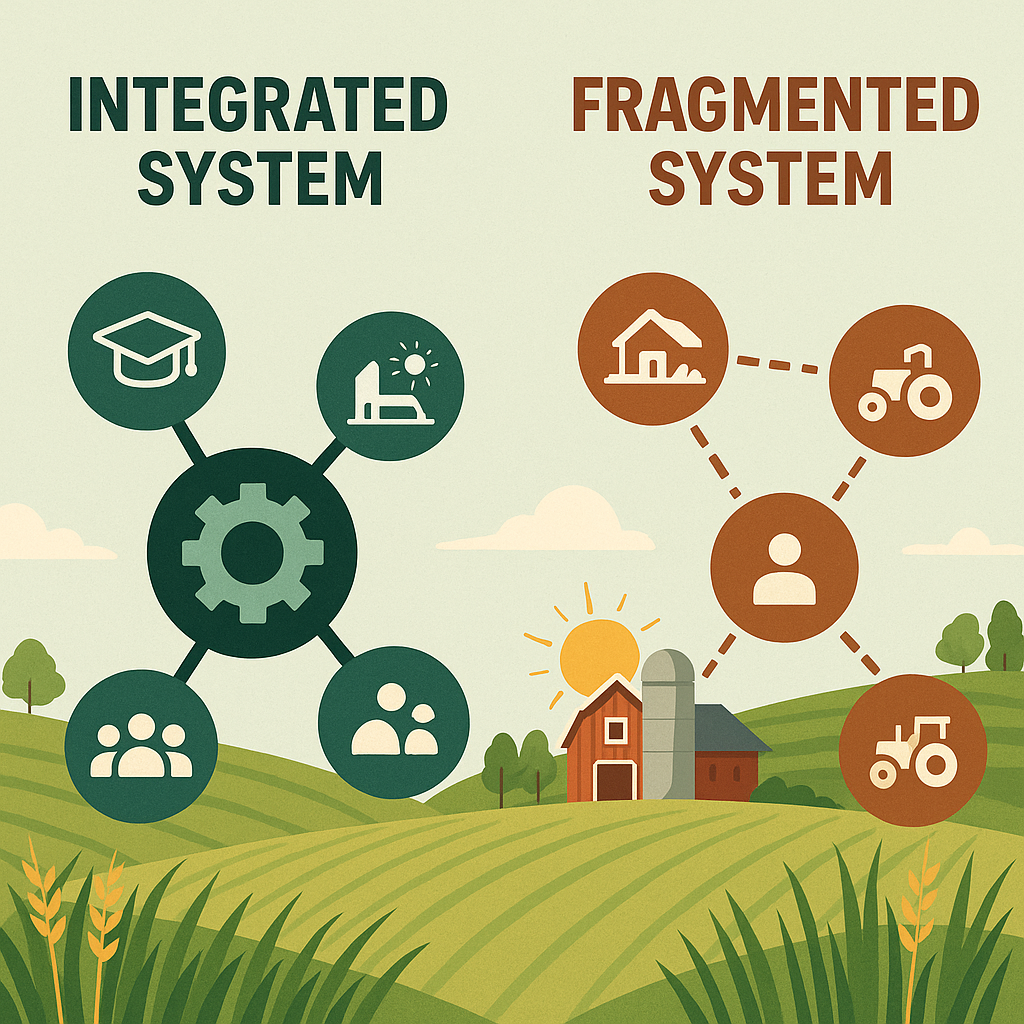
However, current extension and advisory systems are fragmented across the sector. EAS related to crops, livestock, the environment, and food security are often delivered independently. Additionally, support for farm management—crucial for decision-making, risk management, and profitability—is frequently disconnected from technical advisory services.

It is also important to note that extension systems have been facing challenges of adequately promoting equity and accessibility, particularly for Indigenous and northern communities, as well as other underserved groups. Geographic isolation, limited infrastructure, cultural mismatches, and historical inequities create barriers to accessing relevant, trustworthy, and context-specific EAS.

These challenges emphasize the need for a cross-sectoral and inclusive framework that:

  • Integrates crop, livestock, environmental, food security, and farm management systems,
  • Embeds equity, targeting, and inclusion at its core,
  • Supports diverse knowledge systems, including Indigenous and place-based knowledge,
  • Leverages Extension 4.0 tools and approaches for more responsive and adaptive service delivery.

Overall Goal

To foster discussion and gather insights on an inclusive Extension 4.0 framework that integrates crop, livestock, farm business management, environmental sustainability, food security, and equity considerations, thereby supporting a resilient and sustainable agriculture and agri-food system.

Symposium Discussion Themes

The following thematic questions will guide discussion throughout the symposium.

  1. What are the common functions, tools, and approaches across EAS?
  2. How do differences in production sectors, cycles, knowledge requirements, and risk profiles shape EAS delivery?
  3. What institutional and professional structures reinforce sectoral separation?
  4. How does the separation affect farm-level decision-making?
  5. What inefficiencies or missed synergies arise?
  6. How does fragmentation influence environmental outcomes and resource use?
  7. How can farm management EAS serve as a unifying platform for integration?
  8. What tools and methods support whole-farm assessment and decision-making?
  9. How can we promote Equity, Targeting, and Inclusion in EAS?
    • 9-1 Targeted advisory approaches for remote and northern regions.
    • 9-2 Integration of Indigenous and place-based knowledge systems.
    • 9-3 Addressing barriers to access (infrastructure, language, trust).
    • 9-4 Inclusive service design for women, youth, and marginalized groups.
  10. How can CAREE support capacity building and development of EAS in Canada?

Conference Registration

Registration Rates

Registration TypeEarly Bird Rate (Until Sept. 5th, Sept 15th)Regular Rate (Sept. 6th/ Sept 16th- Oct 5th)Onsite Rate (Oct. 31st)
Student/Retired$250.00$350.00$400.00
Faculty/Professional$350.00$450.00$500.00
Virtual (limited seats only)$150.00$200.00N/A

* All prices are in Canadian Dollars (CAD)

“Student registrants are required to submit a valid student ID, and retired professionals must provide a copy of their ID. Please send these documents to Caree@uoguelph.ca.”

“This is a face-to-face event. However, we wish to accommodate a limited number online/remote participation based on the distance (international and outside of province) of participants and needs. Please reach out if you can not attend face-to-face. “

The Honourable Robert Black, P. Ag. (Hon)

Senator for Ontario

The Honourable Rob Black has worked in the rural, agricultural and leadership arenas for much of his working career. He has had close involvement with 4-H Canada and 4-H Ontario and other leadership programs, such as Junior Farmers and the Advanced Agricultural Leadership Program (AALP). He credits his involvement in these programs with allowing him to develop the skills that would lead him to apply to be a senator. He is a past president of the Canadian 4-H Council. Rob was Ward 5 representative on Wellington County Council. He is also a past manager of the Ontario Research and Development Challenge Fund and president of the Ontario Agricultural Hall of Fame Association and the Wellington County Historical Society. 
 
Rob worked with the Ontario Ministry of Agriculture, Food and Rural Affairs (OMAFRA) for 15 years. Following his time at OMAFRA, he spent five years as the executive director of 4-H Ontario. He then accepted the role of executive director of The Centre for Rural Leadership, which morphed in to the Rural Ontario Institute (ROI). In 2012, in recognition of Rob’s significant contributions to 4-H across Canada over many years, he received the Queen Elizabeth II Diamond Jubilee Medal. In 2013, Rob was awarded the Outstanding Leadership Program Director Award from the International Association of Programs for Agricultural Leadership (IAPAL) and in 2016 was made an honourary member of the Canadian 4-H Council. In 2024, Rob was made an honourary member of the Canadian Society of Soil Science.  
 
Rob applied to be a senator in July 2016, after some prompting from his son, Tayler. In February 2018 he received a call from the Prime Minister, summoning him to the Senate to represent the province of Ontario. The Prime Minister told Rob specifically that he wanted him to bring his background in agriculture, rural community development and leadership development to the Senate. Since Feb. 27, 2018, Rob has been working on several issues of importance to Canadians through his role and is the chair of the Standing Committee on Agriculture and Forestry and a member of Rules, Procedures and the Rights of Parliament and the Joint Committee on the Library of Parliament. 
 
Rob served as the chair of the Canadian Senators Group (CSG) from its inception in 2019 until October 2023. In February 2021, Canadian Western Agribition recognized Rob as one of the Top 50 Most Influential People in Agriculture. In July 2021, the Canadian Produce Marketing Association recognized Rob as the 2021 Produce Champion. The annual Produce Champion award is given to a Member of Parliament or Senator who has been supportive of the produce industry and effective at bringing industry issues to the forefront on Parliament Hill. In March 2023, Rob was a recipient of the Hal Rogers Fellow Award, the highest honour conferred by the Kin Canada Foundation. This award is infrequently bestowed and reserved for those who have made a significant difference to their communities at the local, provincial, or national level.  
 
Rob and his wife Julie live north of Fergus, ON and have four grown children and three grandsons

See full bio

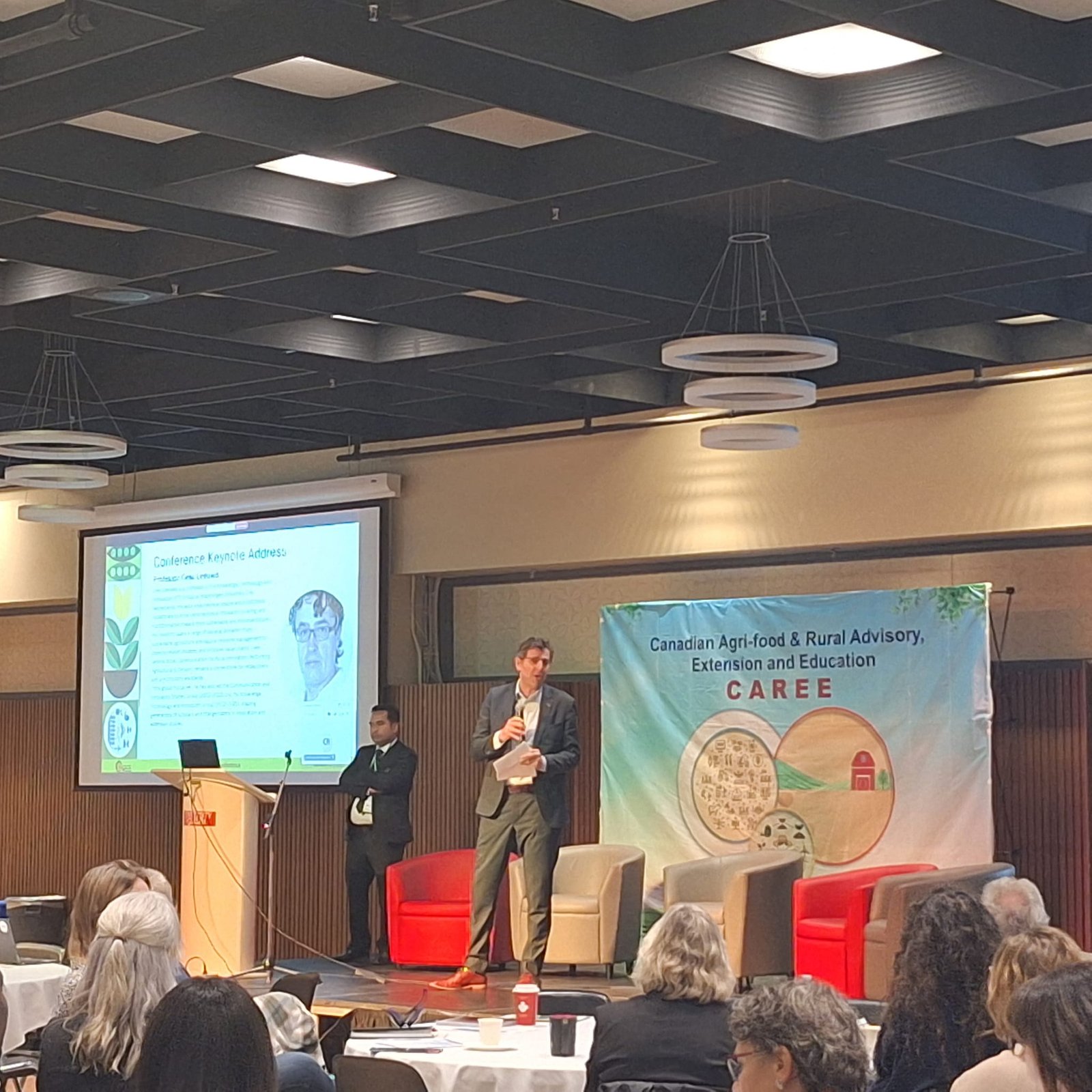
Cees Leeuwis

Professor, Collaborative Research, Communication and Change at the Knowledge, Technology and Innovation group at Wageningen University, The Netherlands

Cees Leeuwis is professor of Collaborative Research, Communication and Change at the Knowledge, Technology and Innovation group at Wageningen University, The Netherlands.  

He studies processes of socio-technical innovation, scaling and transformation in networks, collaboration between different disciplines, research for development policy, the functioning of innovation support systems and the role of innovation platforms, science communication, extension and brokers therein. One of his key reference books includes Communication for Rural Innovation: Rethinking Agricultural Extension 

He works in many societal domains, including sustainable agriculture, natural resources management, poverty related diseases and inclusive value chains. 

Previously, Cees Leeuwis was professor and chair of the Communication and Innovation Studies group (2002-2012) and professor and chair of the Knowledge, Technology and Innovation group (2012-2021). 

Deb Stark

The Board of Governor, University of Guelph (incoming chair)

Deb calls herself a leader and a learner with a lifelong interest in Canadian agriculture and the people who feed us.  She is a former Deputy Minister of OMAFRA (Ontario Ministry of Agriculture, Food and Agribusiness) and Chief Veterinary Officer for Ontario. 

She spends her time volunteering and sitting on boards, including the University of Guelph (Incoming Chair), the Golden Triangle Angel Network, Veterinarians Without Borders Canada, and, most recently, the Canadian Agri-Food Automation and Intelligence Network. 

Laurens Klerkx

Full Professor of Agrifood Innovation and Transition at the University of Talca, Chile, Visiting full professor at Wageningen University

Laurens Klerkx is Full Professor of Agrifood Innovation and Transition at the University of Talca, Chile, and visiting full professor at Wageningen University, The Netherlands. Initially trained in plant production systems science, he has moved to doing social science on innovation in agrifood systemsHis interests and expertise are in agricultural extension, agricultural innovation systems, transformative innovation policy, agrifood digitalization, and most recently agrifood tech start-up ecosystems. With his team of PhD and postdoc researchers, as well as international colleagues, he has published widely on these topics over the past 20 years. He was editor-in-chief of The Journal of Agricultural Education and Extension and is currently editor of Agricultural Systems. 

Chloe McCulloch

Head of SAC Consulting, SRUC

Chloe McCulloch is Head of SAC Consulting, the consultancy division of SRUC – Scotland’s Rural College – a unique institution which combines academic teaching, applied research and on-the-ground consultancy to support the rural and agricultural sectors. She heads a 200-strong team delivering independent advice to farming and land-based businesses across Scotland. 

Chloe has deep expertise in the design and delivery of government-funded advisory services. She was formerly responsible for the operational strategy of the Farm Advisory Service (FAS), Scotland’s national programme providing one-to-many advice for farmers, crofters and land managers. In her current role, she remains strategically involved, including liaison with government stakeholders. 

A graduate of SRUC, Chloe first trained as an agricultural consultant and has worked with a wide range of farm types.  With over two decades of experience in rural consultancy, she plays a key role ensuring SAC Consulting works in close alignment with SRUC’s education and research arms, embedding practical knowledge exchange across the organisation’s work.   

Mohamad Yaghi

vice president of innovation hub and Agexpert at Farm credit canada

Mohamad Yaghi is the Vice President of Innovation Hub and AgExpert at Farm Credit Canada.

He was formally RBC’s Climate and Agriculture Policy Lead at the Climate Action Institute. With over a decade of experience in the agriculture and agri-food industry, Mohamad shaped RBC’s research and engagement in the sector to inform and inspire transition pathways across the economy and to push Canada to become the world’s sustainable breadbasket. Before joining RBC, Mohamad led the successful market development of an international agriculture service provider in Canada and U.S., founded and led an AgTech start-up, Rakr Inc., that closely worked with livestock farmers across North America and Southeast Asia to promote energy efficient farming practices, and worked in the thought leadership groups at KPMG Lighthouse and GE Canada to propel innovation across Canada.

Jennifer Struthers

Senior Consultant & Team Leader SAC Consulting

Jennifer Struthers has led a team at SAC Consulting, part of Scotland’s Rural College, since 2010, providing technical and business advice to over 400 dairy and livestock farming clients. With extensive experience in government-funded advisory programs, she contributed to Scotland’s Farm Advisory Service (FAS) and developed initiatives like FASTV and FAS Connect to promote peer-led learning. Jennifer also facilitates the Clyde Valley Wader Group, a conservation network focused on protecting bird species like Lapwing and Curlew, which won a Nature of Scotland Award. In addition to her consultancy work, she manages a 700-acre upland beef and sheep farm with her husband while raising two children.

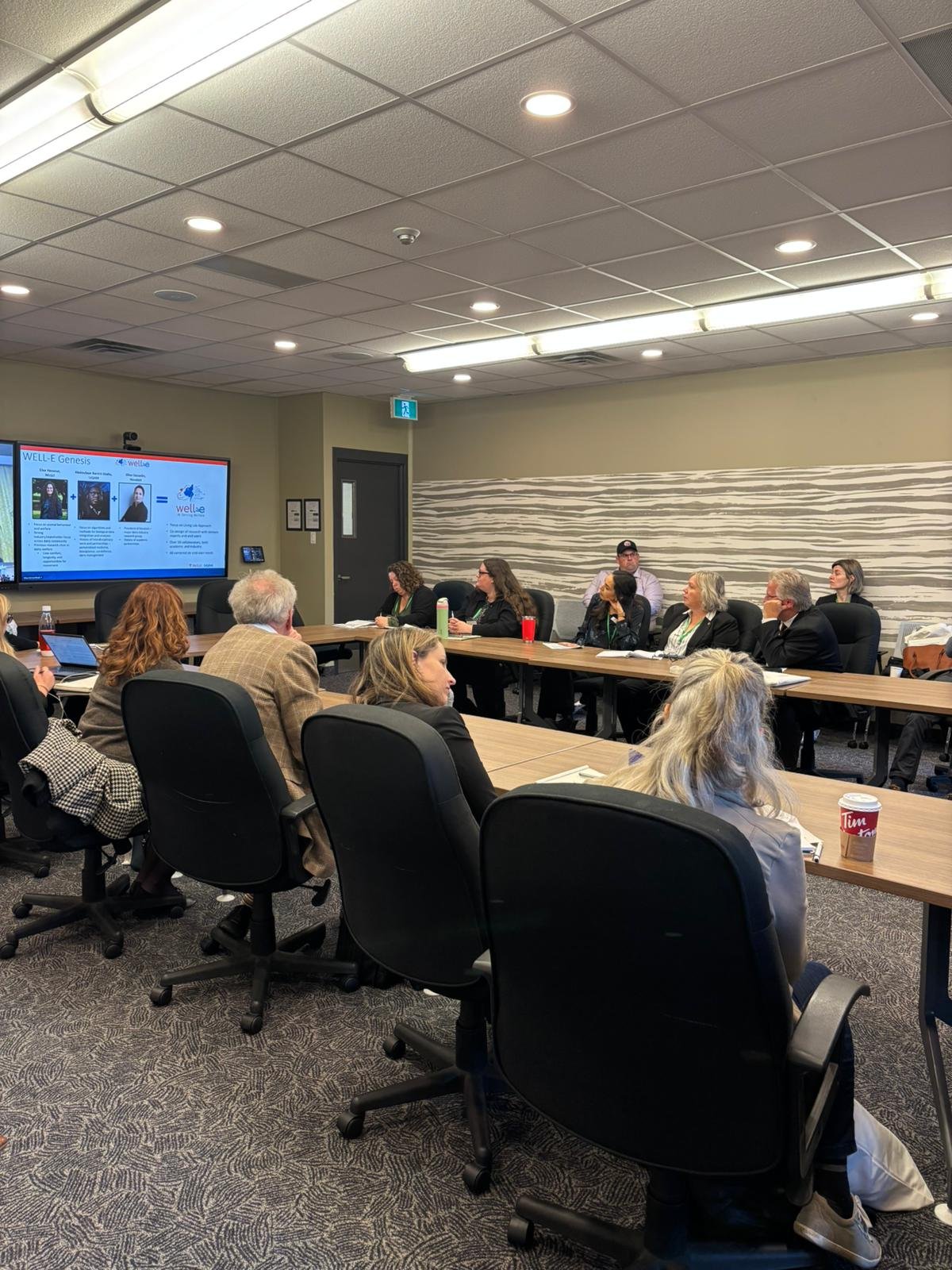
Elsa Vasseur

Associate Professor William Dawson Scholar Innovation Chair in Animal Welfare and Artificial Intelligence (WELL-E)

Dr. Elsa Vasseur is an Associate Professor in Animal Science at McGill University, a William Dawson Scholar, and Co-Chairholder of the Research and Innovation Chair in Animal Welfare and Artificial Intelligence (WELL-E). Her interdisciplinary research integrates technology, animal welfare, and sustainability in livestock systems, with a focus on dairy production. With an international academic background and a PhD from Université Laval, she previously led the Industrial Research Chair in the Sustainable Life of Dairy Cattle (2016–2022) and actively contributes to academic and scientific committees across Canada. Vasseur works closely with farmers and institutional partners to develop practical, innovative solutions that enhance animal well-being, farm profitability, and environmental sustainability.

Keith Currie

President, Canadian Federation of Agriculture

Keith Currie, a Collingwood, Ontario farmer, was born and raised on the family farm and is the 8th generation on the farm family operation. Keith graduated with a diploma in Agriculture Production Management from the University of Guelph, Ridgetown College in 1982. Upon Graduation, Keith returned home to manage the family dairy and cash crop farm in Simcoe County with his wife Janice and together they have raised four children.

Keith’s operation now focuses on production of grains and oilseed, forages for dry hay, along with a sweet corn and gladiolus flower production.

Over the years, Keith has represented many agriculture boards and organizations at the regional, provincial and federal levels, serving on both livestock and cropping organizations. Keith is the Past President of the Ontario Federation of Agriculture(OFA) and has had 25+ years of board experience with the OFA. Keith is also an Ontario delegate to The Co-Operators Insurance.

Keith has also been appointed to three provincial government advisory committees in Ontario, the 4 Plan Review committee(a review of 4 provincial land use plans), the Environmental Advisory committee, as the Wetlands Advisory committee

Before becoming CFA President in 2023, Keith served on the CFA board for several years, and was elected as the organization’s 1st Vice-President in 2019.

Brent Preston

President, Farmers for Climate Solutions

Brent worked as a human rights investigator, election observer and journalist on four continents before becoming a farmer. For the past eighteen years, he has run The New Farm, a wholesale vegetable operation near Creemore, Ontario, with his wife, Gillian.

The farm supplies specialty retail stores and some of the best restaurants in Canada. In 2024, Brent and Gillian transformed their farm business into The New Farm Centre, a registered charity dedicated to developing, demonstrating, and advocating for a regenerative farming system.

Tracy Evans

Executive Director, Regional Services Branch, Saskatchewan Ministry of Agriculture

Tracy Evans is the Executive Director of the Regional Services Branch in Saskatchewan’s Ministry of Agriculture, bringing over 20 years of experience in agricultural extension and leadership. She has held various roles, including Extension Agrologist, Livestock Development Specialist, and Regional Manager, and has a strong background in animal science. Tracy leads a team focused on supporting producers and the agri-food sector through tech transfer, applied research, and sustainable practices. She is actively involved in the Livestock and Forage Centre of Excellence and serves on both the Ministry’s Management and Values committees. Raised on a mixed farm in southeast Saskatchewan, Tracy now lives in rural northeast Saskatchewan with her family and two labrador retrievers, and enjoys outdoor activities and volunteering with Search and Rescue.

Steve Roche

MSc, PhD - Director & Principal Consultant

Steven Roche is the Director and Principal Consultant of ACER Consulting, where he combines science, strategy, and storytelling to drive on-farm change. With an MSc and a PhD in epidemiology and deep roots in agricultural extension, Steven brings a unique blend of research, communication, and practical insight to the table. He’s passionate about translating evidence into action to improve animal health and welfare across the food animal industries. 

CAREE 2026 · Extension & Advisory Services

Symposium Program

Full-day schedule · 8:00 AM – 5:00 PM

8:00 AM

Registration

60 MIN
9:00 AM

Welcome and Opening Remarks

30 MIN
9:30 AM

Opening Presentation

30 MIN
10:00 AM

EAS in the Crop Sector

60 MIN
11:00 AM

EAS in the Livestock Sector

60 MIN
12:00 PM

Lunch

30 MIN
12:30 PM

EAS in Farm Management and Integration for Decision-Making

60 MIN
1:30 PM

Addressing Equity and Inclusion

30 MIN
2:00 PM
Anchor Session

Reimagining Capacity Building in EAS: Extension Education, Knowledge Systems, and the CAREE 2027 Agenda

2.5 HRS
Session details
This session will foster discussion on education and capacity-building initiatives in EAS in Canada, with particular attention to how academic programs, professional training, and experiential learning platforms are preparing the next generation of educators, extensionists and advisors to operate in increasingly complex, digital, and cross-sectoral environments. This includes exploring gaps in current curricula, opportunities for interdisciplinary training, and mechanisms to strengthen linkages among research, practice, and policy.

In this context, the symposium will also highlight the role of emerging knowledge platforms, such as the CAREE Journal, in advancing scholarship and practice in extension and advisory services, and will help shape the agenda for CAREE 2027 as a forum for collaboration, innovation, and knowledge exchange in this evolving field.

Format — Panel discussion · Presentations · Workshop session

4:30 PM

Wrap Up and Next Steps

30 MIN
5:00 PM

Close

Important Parking Details

Parking lot P11 is reserved for conference participants on the 29th, 30th, and 31st.

Directions to the University Centre:

Parking lot P11 is located at the corner of East Ring Rd. and South Ring Rd. From P11, head West along South Lane and turn right on Winegard Walk. Continue North on Winegard Walk and the University Centre will be on your left.

See walking directions here

Conference Program Committee

Ataharul Chowdhury

University of Guelph (Conference Chair)

Ashley Honsberger

Canadian Alliance for Net-Zero Agri-food

Angela Straathof

Ontario Soil and Crop Improvement Association

Charlotte Wall

Poultry Industry Council

Christine Baes

University of Guelph

Derya Tarhan

University of Guelph

David Nielson

North American Agricultural Advisory Network

Dieudonne Harahagazwe

ZeroHunger Consulting

Erin Nelson

University of Guelph

Elsa Vasseur

McGill University

Edel Pérez Lopez

Université Laval

Fally Masambuka-Kanchewa

Iowa State University

Fattane Zarinkalam

University of Guelph

Gordon Gow

University of Alberta

Getu Hailu

University of Guelph

Helen Jensen

Coordination Services-Conseils

Heather Watson

Farm Management Canada
Heather White

Soils at Guelph

Isaac Agholor

University of Mpumalanga

Jean Howden

Livestock Research and Innovation Corporation

Kelly Somerville

Livestock Research and Innovation Corporation

Khondokar Kabir

University of Guelph

Madeleine Arseneau

Agriculture and Agri-food Canada

Megan Sipos

Greenbelt Foundation

Mary Feldskov

Grain Farmers of Ontario

Marie-Claude Lapierre

Coordination Services-Conseils

Mahla Mirali

Grain Data Solutions

M. Salim Uddin

University of Vermont

Milad Zhoolideh

University of Guelph

Md Mahatab Uddin

University of Guelph

Maggie McCormick

PEI Federation of Agriculture

Lawrence Goodridge

University of Guelph

Nasir Khan

University of Guelph

Olivia Wilkins

University of Manitoba

Paige Allen

Ontario Soil Network

Silvia Sarapura

University of Guelph

Sadaf Mollaei

Arrell Food Institute

Sarah Cardey

University of Reading

Steve Roche

Acer Consulting

Sandra K. Znajda

Agriculture and Agri-food Canada

Sara Epp

University of Guelph

Suzana Windon

The Pennsylvania State University

Sophie Krolikowski

Agriculture and Agri-food Canada

Tracy Evans

Ministry of Agriculture, Saskatchewan

Salman Razavi

Grain Data Solutions

Robin Smart

Ontario Ministry of Agriculture, Food and Agribusiness

Sabine Liebenehm

The University of Saskatchewan

Ranjan Datta

Mount Royal University

Saeedeh Nazari Nooghabi

Agricultural Research, Education and Extension Organization

Ryan Gibson

University of Guelph

RJ Taylor

Ontario Aquaculture Association

Ryan Carlow

Greenbelt Foundation

Rebecca Lee

Advocating for Resilient Communities and Sustainable Agri-food Systems

Rebecca Dunn

Agri-food Innovation Alliance

Rebecca Moore

Agri-food Innovation Alliance

Tracy Kittilsen

Dalhousie University

Uduak Edet

University of Guelph

Ramtin Shafaghati

University of Guelph

Asim Biswas

university of guelph

Submission Guidelines

Researchers, educators, students, government officials, policymakers, advisory professionals, producer organizations, community-based organizations, technology/input providers and farmer leaders are invited to submit proposals. A Canadian conference focusing on local, provincial/state, regional and international issues related to agriculture & rural advisory, extension and education

Submit your abstracts for presentations and posters. Check the page for author guidelines and instructions for submission

Submit proposals for professional development sessions, workshops, and roundtable discussions. These sessions are for advancing critical discussions and skill-building. 

Conference Topics:

Topic 1

Policy, approaches, trends and evidence-based action

Topic 2

Digitalization and responsible use of AI in advisory services and education

Topic 3

Indigenous and Northern development, gender, social inclusion, and well-being of agricultural and rural communities

Topic 4

Extension, education, and institutional capacity for driving agri-food systems transformation

Topic 5

Extension and advisory to facilitate entrepreneurship, bio-economy, food safety, ago-ecology, animal welfare and resilience to climate change

Topic 6

Extension, media, rural and risks communication services

Highlights

Supporters

Scroll to Top