Background and Rationale

Agricultural extension and advisory services (EAS) are undergoing a significant transformation towards Extension 4.0. This new approach is characterized by digitalization, diverse advisory systems, and network-based knowledge mobilization. This shift reflects the increasing complexity of agri-food systems, where farmers and service providers must address productivity, environmental sustainability, economic viability, and food security simultaneously.

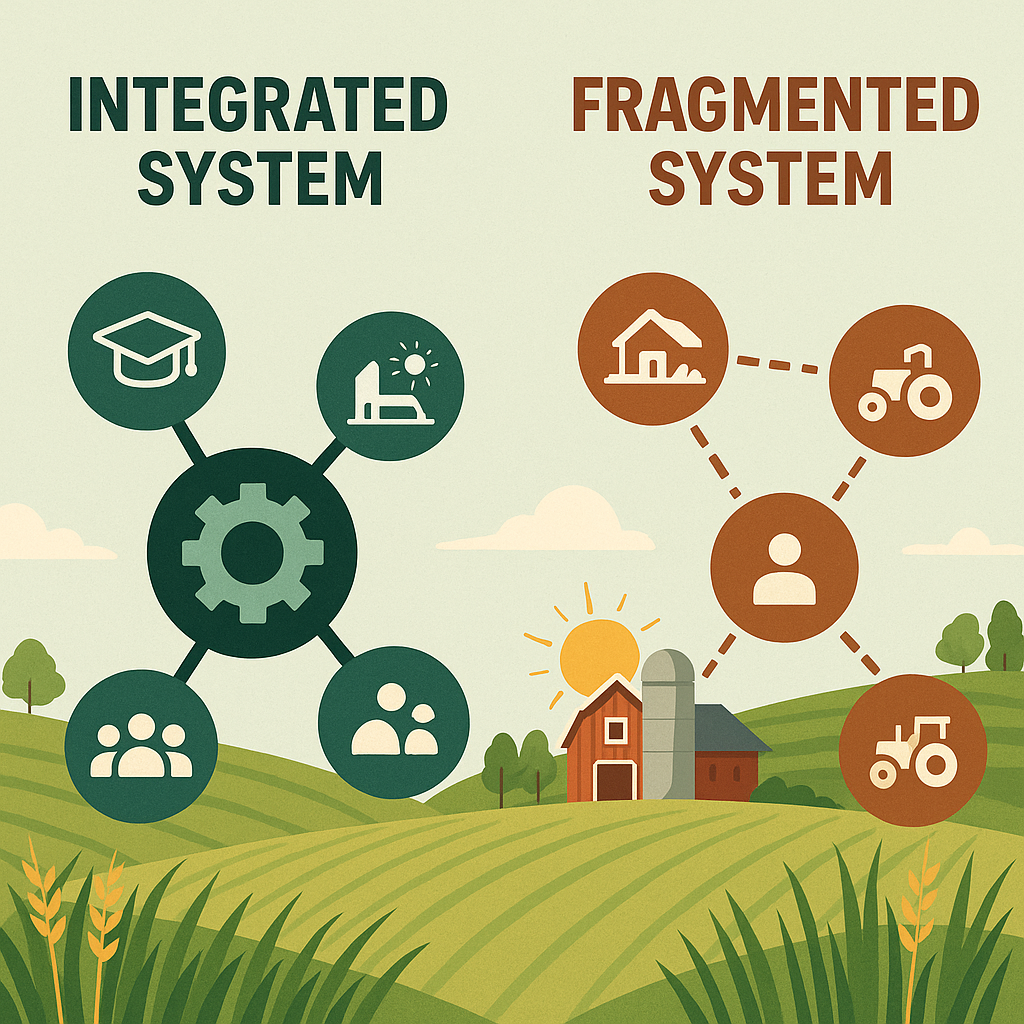
However, current extension and advisory systems are fragmented across the sector. EAS related to crops, livestock, the environment, and food security are often delivered independently. Additionally, support for farm management—crucial for decision-making, risk management, and profitability—is frequently disconnected from technical advisory services.

It is also important to note that extension systems have been facing challenges of adequately promoting equity and accessibility, particularly for Indigenous and northern communities, as well as other underserved groups. Geographic isolation, limited infrastructure, cultural mismatches, and historical inequities create barriers to accessing relevant, trustworthy, and context-specific EAS.

These challenges emphasize the need for a cross-sectoral and inclusive framework that:

  • Integrates crop, livestock, environmental, food security, and farm management systems,
  • Embeds equity, targeting, and inclusion at its core,
  • Supports diverse knowledge systems, including Indigenous and place-based knowledge,
  • Leverages Extension 4.0 tools and approaches for more responsive and adaptive service delivery.

Overall Goal

To foster discussion and gather insights on an inclusive Extension 4.0 framework that integrates crop, livestock, farm business management, environmental sustainability, food security, and equity considerations, thereby supporting a resilient and sustainable agriculture and agri-food system.

The following thematic questions will guide discussion throughout the symposium.

8. Key Questions

  1. What are the common functions, tools, and approaches across EAS?
  2. How do differences in production sectors, cycles, knowledge requirements, and risk profiles shape EAS delivery?
  3. What institutional and professional structures reinforce sectoral separation?
  4. How does the separation affect farm-level decision-making?
  5. What inefficiencies or missed synergies arise?
  6. How does fragmentation influence environmental outcomes and resource use?
  7. How can farm management EAS serve as a unifying platform for integration?
  8. How can we promote Equity, Targeting, and Inclusion in EAS?
    1. Targeted advisory approaches for remote and northern regions.
    2. Integration of Indigenous and place-based knowledge systems.
    3. Addressing barriers to access (infrastructure, language, trust).
    4. Inclusive service design for women, youth, and marginalized groups.
How can CAREE support capacity building and development of EAS in Canada?

Conference Registration

Registration Rates

Registration TypeEarly Bird Rate (Until Sept. 5th, Sept 15th)Regular Rate (Sept. 6th/ Sept 16th- Oct 5th)Onsite Rate (Oct. 31st)
Student/Retired$250.00$350.00$400.00
Faculty/Professional$350.00$450.00$500.00
Virtual (limited seats only)$150.00$200.00N/A

* All prices are in Canadian Dollars (CAD)

“Student registrants are required to submit a valid student ID, and retired professionals must provide a copy of their ID. Please send these documents to Caree@uoguelph.ca.”

“This is a face-to-face event. However, we wish to accommodate a limited number online/remote participation based on the distance (international and outside of province) of participants and needs. Please reach out if you can not attend face-to-face. “

Topics

The conference focuses on the following topics to explore concepts, frameworks, methods, tools, experiences, and empirical evidence related to the transformative processes of the agri-food system and rural development. We invite submissions from cross-sectoral (e.g., crop, livestock, environment and rural), provincial, interdisciplinary and global perspectives within agri-food & rural advisory, extension, and education. We hope the conference will help us get some insights into the overarching questions: What does agri-food & rural advisory and extension look like across Canada? Is it worthwhile to work on this topic, especially considering our global and regional reputation? What is the rigour and value of this discipline for those supporting agri-food systems and rural development? How can we tap into regional networks, such as the North American Agricultural Advisory Network? How does our approach compare to that of our neighbours in the USA, Europe and other jurisdictions?

Exploring the historical context and current transformations in Canada’s agricultural extension and education systems, the session will focus on the role of advisory systems in navigating these changes. It will highlight key policies, frameworks, and strategies that facilitate knowledge exchange and collaboration across multiple sectors. The discussion will address the trends and evidence-based action at the provincial and federal levels and how they align with each other and with global and regional trends.

The digital revolution is reshaping agri-food and rural development. This topic examines how technologies, such as AI and digital platforms, are transforming advisory and educational services. Discussions will center on how these technologies affect decision-making, communication, and collaboration among stakeholders. It will also cover challenges related to ethics, data governance, misinformation, and the role of AI tools like ChatGPT in knowledge mobilization.

The intersection of equity, diversity, and development within Canada’s agri-food & rural advisory and extension systems will be explored, particularly in Indigenous, northern, remote and disadvantaged communities. The topic focuses on how advisory services can better serve marginalized groups, promote decolonization, and support social inclusion in agri-food systems. Moreover, mental health and well-being, especially in rural and remote communities, are the key focus of the topic.

Focusing on organizational and institutional capacities, this topic discusses the growing need for advisory and extension organizations to adapt to new challenges, including digitalization, AI, and misinformation. It will explore how advisors can enhance their professional skills, manage diversity, and engage in cross-cultural interactions while supporting systemic, transformative processes within agri-food and rural systems.

Extension services play a key role in supporting entrepreneurs and stakeholders in adopting innovative practices in bio-economy, agro-ecology, food safety, and animal welfare. The topic will explore how advisory systems can assist farmers and rural communities in transitioning to more resilient and sustainable agricultural systems, while addressing emerging challenges like climate change and disaster management.

Media and journalism play a vital role in shaping perceptions about agri-food systems and rural livelihoods. This topic explores how media and communication services can help farmers and rural communities respond to emerging risks and disasters. It also covers the transition of traditional media in the digital age and the collaboration between media, extension, and advisory services to promote sustainable agri-food systems and rural development.

The Honourable Robert Black, P. Ag. (Hon)

Senator for Ontario

The Honourable Rob Black has worked in the rural, agricultural and leadership arenas for much of his working career. He has had close involvement with 4-H Canada and 4-H Ontario and other leadership programs, such as Junior Farmers and the Advanced Agricultural Leadership Program (AALP). He credits his involvement in these programs with allowing him to develop the skills that would lead him to apply to be a senator. He is a past president of the Canadian 4-H Council. Rob was Ward 5 representative on Wellington County Council. He is also a past manager of the Ontario Research and Development Challenge Fund and president of the Ontario Agricultural Hall of Fame Association and the Wellington County Historical Society. 
 
Rob worked with the Ontario Ministry of Agriculture, Food and Rural Affairs (OMAFRA) for 15 years. Following his time at OMAFRA, he spent five years as the executive director of 4-H Ontario. He then accepted the role of executive director of The Centre for Rural Leadership, which morphed in to the Rural Ontario Institute (ROI). In 2012, in recognition of Rob’s significant contributions to 4-H across Canada over many years, he received the Queen Elizabeth II Diamond Jubilee Medal. In 2013, Rob was awarded the Outstanding Leadership Program Director Award from the International Association of Programs for Agricultural Leadership (IAPAL) and in 2016 was made an honourary member of the Canadian 4-H Council. In 2024, Rob was made an honourary member of the Canadian Society of Soil Science.  
 
Rob applied to be a senator in July 2016, after some prompting from his son, Tayler. In February 2018 he received a call from the Prime Minister, summoning him to the Senate to represent the province of Ontario. The Prime Minister told Rob specifically that he wanted him to bring his background in agriculture, rural community development and leadership development to the Senate. Since Feb. 27, 2018, Rob has been working on several issues of importance to Canadians through his role and is the chair of the Standing Committee on Agriculture and Forestry and a member of Rules, Procedures and the Rights of Parliament and the Joint Committee on the Library of Parliament. 
 
Rob served as the chair of the Canadian Senators Group (CSG) from its inception in 2019 until October 2023. In February 2021, Canadian Western Agribition recognized Rob as one of the Top 50 Most Influential People in Agriculture. In July 2021, the Canadian Produce Marketing Association recognized Rob as the 2021 Produce Champion. The annual Produce Champion award is given to a Member of Parliament or Senator who has been supportive of the produce industry and effective at bringing industry issues to the forefront on Parliament Hill. In March 2023, Rob was a recipient of the Hal Rogers Fellow Award, the highest honour conferred by the Kin Canada Foundation. This award is infrequently bestowed and reserved for those who have made a significant difference to their communities at the local, provincial, or national level.  
 
Rob and his wife Julie live north of Fergus, ON and have four grown children and three grandsons

See full bio

Cees Leeuwis

Professor, Collaborative Research, Communication and Change at the Knowledge, Technology and Innovation group at Wageningen University, The Netherlands

Cees Leeuwis is professor of Collaborative Research, Communication and Change at the Knowledge, Technology and Innovation group at Wageningen University, The Netherlands.  

He studies processes of socio-technical innovation, scaling and transformation in networks, collaboration between different disciplines, research for development policy, the functioning of innovation support systems and the role of innovation platforms, science communication, extension and brokers therein. One of his key reference books includes Communication for Rural Innovation: Rethinking Agricultural Extension 

He works in many societal domains, including sustainable agriculture, natural resources management, poverty related diseases and inclusive value chains. 

Previously, Cees Leeuwis was professor and chair of the Communication and Innovation Studies group (2002-2012) and professor and chair of the Knowledge, Technology and Innovation group (2012-2021). 

Deb Stark

The Board of Governor, University of Guelph (incoming chair)

Deb calls herself a leader and a learner with a lifelong interest in Canadian agriculture and the people who feed us.  She is a former Deputy Minister of OMAFRA (Ontario Ministry of Agriculture, Food and Agribusiness) and Chief Veterinary Officer for Ontario. 

She spends her time volunteering and sitting on boards, including the University of Guelph (Incoming Chair), the Golden Triangle Angel Network, Veterinarians Without Borders Canada, and, most recently, the Canadian Agri-Food Automation and Intelligence Network. 

Laurens Klerkx

Full Professor of Agrifood Innovation and Transition at the University of Talca, Chile, Visiting full professor at Wageningen University

Laurens Klerkx is Full Professor of Agrifood Innovation and Transition at the University of Talca, Chile, and visiting full professor at Wageningen University, The Netherlands. Initially trained in plant production systems science, he has moved to doing social science on innovation in agrifood systemsHis interests and expertise are in agricultural extension, agricultural innovation systems, transformative innovation policy, agrifood digitalization, and most recently agrifood tech start-up ecosystems. With his team of PhD and postdoc researchers, as well as international colleagues, he has published widely on these topics over the past 20 years. He was editor-in-chief of The Journal of Agricultural Education and Extension and is currently editor of Agricultural Systems. 

Chloe McCulloch

Head of SAC Consulting, SRUC

Chloe McCulloch is Head of SAC Consulting, the consultancy division of SRUC – Scotland’s Rural College – a unique institution which combines academic teaching, applied research and on-the-ground consultancy to support the rural and agricultural sectors. She heads a 200-strong team delivering independent advice to farming and land-based businesses across Scotland. 

Chloe has deep expertise in the design and delivery of government-funded advisory services. She was formerly responsible for the operational strategy of the Farm Advisory Service (FAS), Scotland’s national programme providing one-to-many advice for farmers, crofters and land managers. In her current role, she remains strategically involved, including liaison with government stakeholders. 

A graduate of SRUC, Chloe first trained as an agricultural consultant and has worked with a wide range of farm types.  With over two decades of experience in rural consultancy, she plays a key role ensuring SAC Consulting works in close alignment with SRUC’s education and research arms, embedding practical knowledge exchange across the organisation’s work.   

Mohamad Yaghi

vice president of innovation hub and Agexpert at Farm credit canada

Mohamad Yaghi is the Vice President of Innovation Hub and AgExpert at Farm Credit Canada.

He was formally RBC’s Climate and Agriculture Policy Lead at the Climate Action Institute. With over a decade of experience in the agriculture and agri-food industry, Mohamad shaped RBC’s research and engagement in the sector to inform and inspire transition pathways across the economy and to push Canada to become the world’s sustainable breadbasket. Before joining RBC, Mohamad led the successful market development of an international agriculture service provider in Canada and U.S., founded and led an AgTech start-up, Rakr Inc., that closely worked with livestock farmers across North America and Southeast Asia to promote energy efficient farming practices, and worked in the thought leadership groups at KPMG Lighthouse and GE Canada to propel innovation across Canada.

Jennifer Struthers

Senior Consultant & Team Leader SAC Consulting

Jennifer Struthers has led a team at SAC Consulting, part of Scotland’s Rural College, since 2010, providing technical and business advice to over 400 dairy and livestock farming clients. With extensive experience in government-funded advisory programs, she contributed to Scotland’s Farm Advisory Service (FAS) and developed initiatives like FASTV and FAS Connect to promote peer-led learning. Jennifer also facilitates the Clyde Valley Wader Group, a conservation network focused on protecting bird species like Lapwing and Curlew, which won a Nature of Scotland Award. In addition to her consultancy work, she manages a 700-acre upland beef and sheep farm with her husband while raising two children.

Elsa Vasseur

Associate Professor William Dawson Scholar Innovation Chair in Animal Welfare and Artificial Intelligence (WELL-E)

Dr. Elsa Vasseur is an Associate Professor in Animal Science at McGill University, a William Dawson Scholar, and Co-Chairholder of the Research and Innovation Chair in Animal Welfare and Artificial Intelligence (WELL-E). Her interdisciplinary research integrates technology, animal welfare, and sustainability in livestock systems, with a focus on dairy production. With an international academic background and a PhD from Université Laval, she previously led the Industrial Research Chair in the Sustainable Life of Dairy Cattle (2016–2022) and actively contributes to academic and scientific committees across Canada. Vasseur works closely with farmers and institutional partners to develop practical, innovative solutions that enhance animal well-being, farm profitability, and environmental sustainability.

Keith Currie

President, Canadian Federation of Agriculture
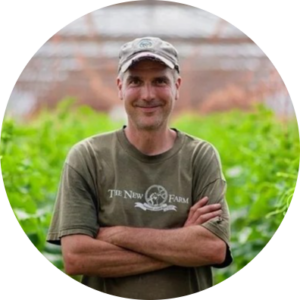
Keith Currie, a Collingwood, Ontario farmer, was born and raised on the family farm and is the 8th generation on the farm family operation. Keith graduated with a diploma in Agriculture Production Management from the University of Guelph, Ridgetown College in 1982. Upon Graduation, Keith returned home to manage the family dairy and cash crop farm in Simcoe County with his wife Janice and together they have raised four children.

Keith’s operation now focuses on production of grains and oilseed, forages for dry hay, along with a sweet corn and gladiolus flower production.

Over the years, Keith has represented many agriculture boards and organizations at the regional, provincial and federal levels, serving on both livestock and cropping organizations. Keith is the Past President of the Ontario Federation of Agriculture(OFA) and has had 25+ years of board experience with the OFA. Keith is also an Ontario delegate to The Co-Operators Insurance.

Keith has also been appointed to three provincial government advisory committees in Ontario, the 4 Plan Review committee(a review of 4 provincial land use plans), the Environmental Advisory committee, as the Wetlands Advisory committee

Before becoming CFA President in 2023, Keith served on the CFA board for several years, and was elected as the organization’s 1st Vice-President in 2019.

Brent Preston

President, Farmers for Climate Solutions

Brent worked as a human rights investigator, election observer and journalist on four continents before becoming a farmer. For the past eighteen years, he has run The New Farm, a wholesale vegetable operation near Creemore, Ontario, with his wife, Gillian.

The farm supplies specialty retail stores and some of the best restaurants in Canada. In 2024, Brent and Gillian transformed their farm business into The New Farm Centre, a registered charity dedicated to developing, demonstrating, and advocating for a regenerative farming system.

Tracy Evans

Executive Director, Regional Services Branch, Saskatchewan Ministry of Agriculture

Tracy Evans is the Executive Director of the Regional Services Branch in Saskatchewan’s Ministry of Agriculture, bringing over 20 years of experience in agricultural extension and leadership. She has held various roles, including Extension Agrologist, Livestock Development Specialist, and Regional Manager, and has a strong background in animal science. Tracy leads a team focused on supporting producers and the agri-food sector through tech transfer, applied research, and sustainable practices. She is actively involved in the Livestock and Forage Centre of Excellence and serves on both the Ministry’s Management and Values committees. Raised on a mixed farm in southeast Saskatchewan, Tracy now lives in rural northeast Saskatchewan with her family and two labrador retrievers, and enjoys outdoor activities and volunteering with Search and Rescue.

Steve Roche

MSc, PhD - Director & Principal Consultant

Steven Roche is the Director and Principal Consultant of ACER Consulting, where he combines science, strategy, and storytelling to drive on-farm change. With an MSc and a PhD in epidemiology and deep roots in agricultural extension, Steven brings a unique blend of research, communication, and practical insight to the table. He’s passionate about translating evidence into action to improve animal health and welfare across the food animal industries. 

Day 1

October 29 / Wed

8:00–9:00

Breakfast

9:00–10:30

Opening / Keynote

10:30–11:00

Break

11:00–12:30

Parallel Session I

12:30–13:45

Lunch / Poster / Innovation expo

13:45–15:15

Plenary I / Invited Presentation

15:15–15:40

Break

15:45–17:30

Parallel Session II

18:00–20:30

Welcome Reception / Dinner

Day 2

October 30 / Thurs

8:00–8:45

Breakfast

9:00–10:30

Parallel Session III

10:30–11:00

Break

11:00–12:30

Parallel Session IV

12:30–13:45

Lunch / Poster / Innovation Expo

13:45–15:30

Plenary II / Invited Session

15:30–15:55

Break

16:00–17:30

Parallel Session V

18:00–20:30

Business Meeting Dinner / What’s Next for CAREE

Day 3

October 31 / Friday

8:00–8:45

Breakfast

9:00–10:30

Parallel Session VI

10:30–11:00

Break

11:00–12:30

Plenary III / Closing Session

14:00–16:00

Post Conference Networking (Optional/ Need Registration)

CAREE 2025 Instruction for Presenters

CAREE 2025 Full Schedule

08:00–08:45

Location : PCH

9:00–10:30

Location : PCH CENTRE 

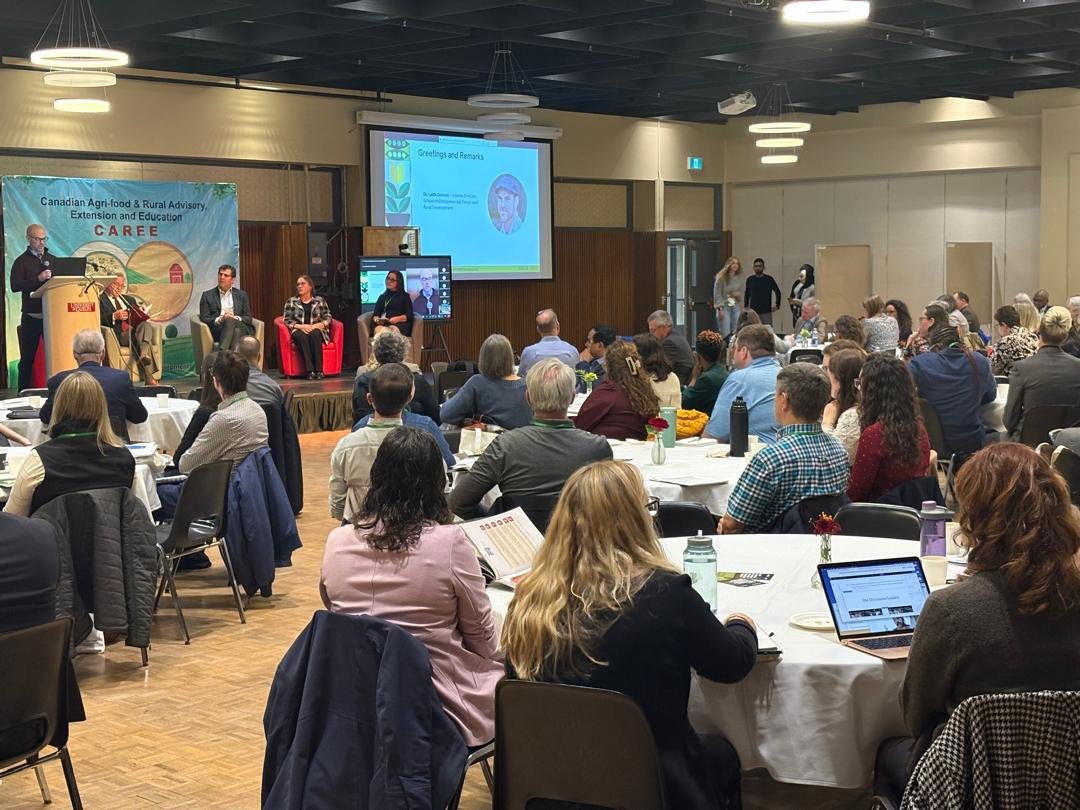
GREETINGS & OPENING
Dr. Shayan Sharif, Interim Vice-President (Research & Innovation), University of Guelph
Dr. Ben Bradshaw, AVP Graduate Studies and International, University of Guelph
Dr. Christine Baes, Acting Associate Dean, External Relations, OAC, University of Guelph

KEYNOTE
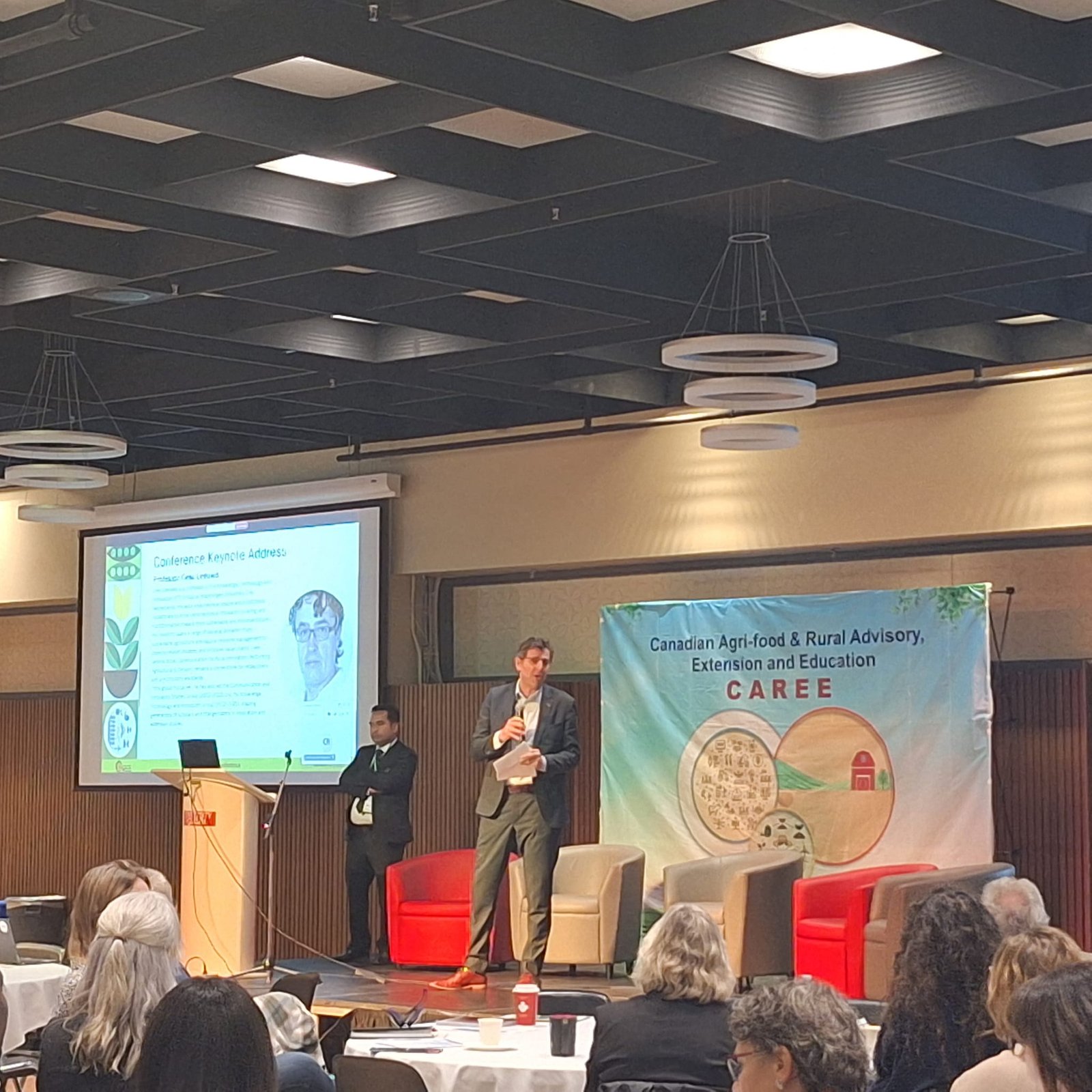
The Honourable Robert Black, P. Ag. (Hon), Senator for Ontario
Professor Cees Leeuwis, Wageningen University

10:30–11:00

Location : PCH

11:00–12:30

Parallel (Abstract) Session I
Wednesday, October 29

AI in Agricultural Extension and Advisory

• Navigating Copyright Challenges in Generative AI for Climate-Smart Agricultural
Extension and Advisory Services
Md Mahatab Uddin
• Extension Focused Artificial Intelligence to Aid Ohio Soybean Producers
Lee Beers *; John Fulton; Rob Leeds; Mike Estadt; Chris Zoller
• Assessing AI Adoption in Ontario’s Livestock and Horticulture Sectors: Challenges
and Opportunities for Responsible Innovation
Ataharul Chowdhury; Uduak Edet*
• Evaluating the Effectiveness of Large Language Models for Livestock and Climate
Related Agricultural Advices in Ontario
Ramtin Shafaghati *; Ataharul chowdhury

Digital Communication Platforms and Tools

• Diversifying Digital Communication in Extension Services: Circumventing Social
Media Lock-in Effects
Gordon Gow
• AI, Audio, and Agriculture: Cross-Border Podcasting as a Tool for Digital Pedagogy
and Sustainability Communication
Madison Dyment*
• Perception of Extension Professionals Regarding the Use of Digital Extension Services
in Bangladesh
Saifur Rahman
• Empowering Communities Through Digital Tools in the Philippines: From Laboratory
to the Farm
Maria Victoria Espaldon*; Decibel Eslava; Moises Dorado; Loucel Cui; Leo Neil
Viado; Bong Salazar; Regina Regalado; Rosemarie Laila Dimasuay; Gideon Aries
Burgonio; Eduardo Calzeta

ICT Adoption and Precision Technologies

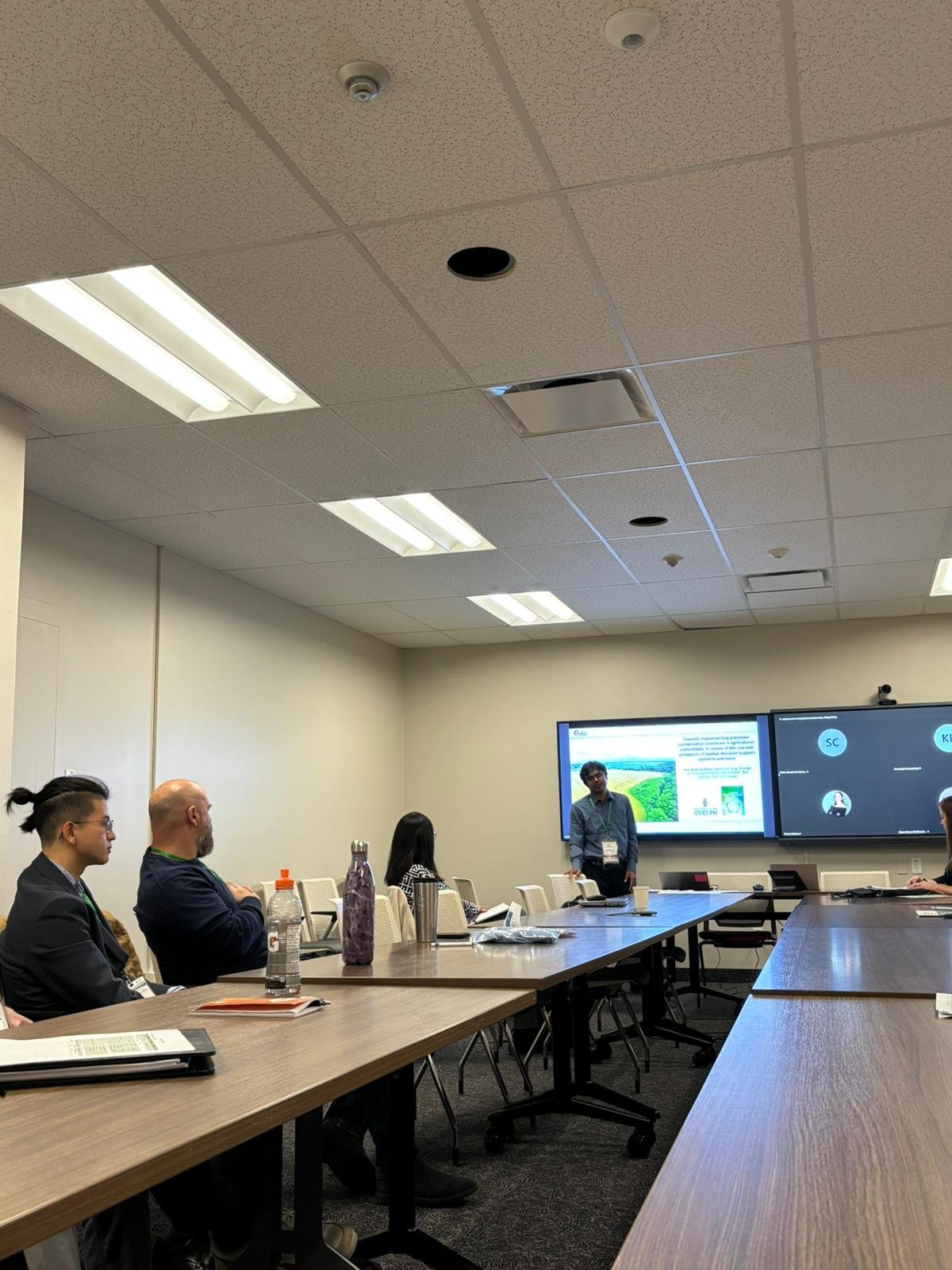
• Towards Implementing Precision Conservation Practices in Agricultural Watersheds: A
Review of the Use and Prospects of Spatial Decision Support Systems and Tools
Md Bodruddoza
• Assessing the Perceptions of Precision Laser Weeding: A Pilot Study on Measurement
Reliability
Sana Ullah*, Chin-Ling*, Ginger Orton, and Md Sultan Mahmud
• Adoption of Information and Communication Technology (ICT) by Farmers to
Promote Sustainable Agriculture in the Chittagong Hill Tracts of Bangladesh
Mohammad Anamul Haque*; Rafiqul Islam; Shyamal Chandra Sarker; Ahmmed Al
Name; Md. Osman Gazi
• Improving Livelihood in Vavuniya District, Sri Lanka: A Case Study of Dairy Farmers’
Actual Use Towards Accessing Digital Extension Services
Kamshajini Raveenthiran*; Helen Hambly Odame

Decision Support Systems and Data-Driven Innovation

• Bridging the data-action gap: potential opportunities and risks for generative AI
language models in communicating data insights to poultry farms
Laura Palczynski
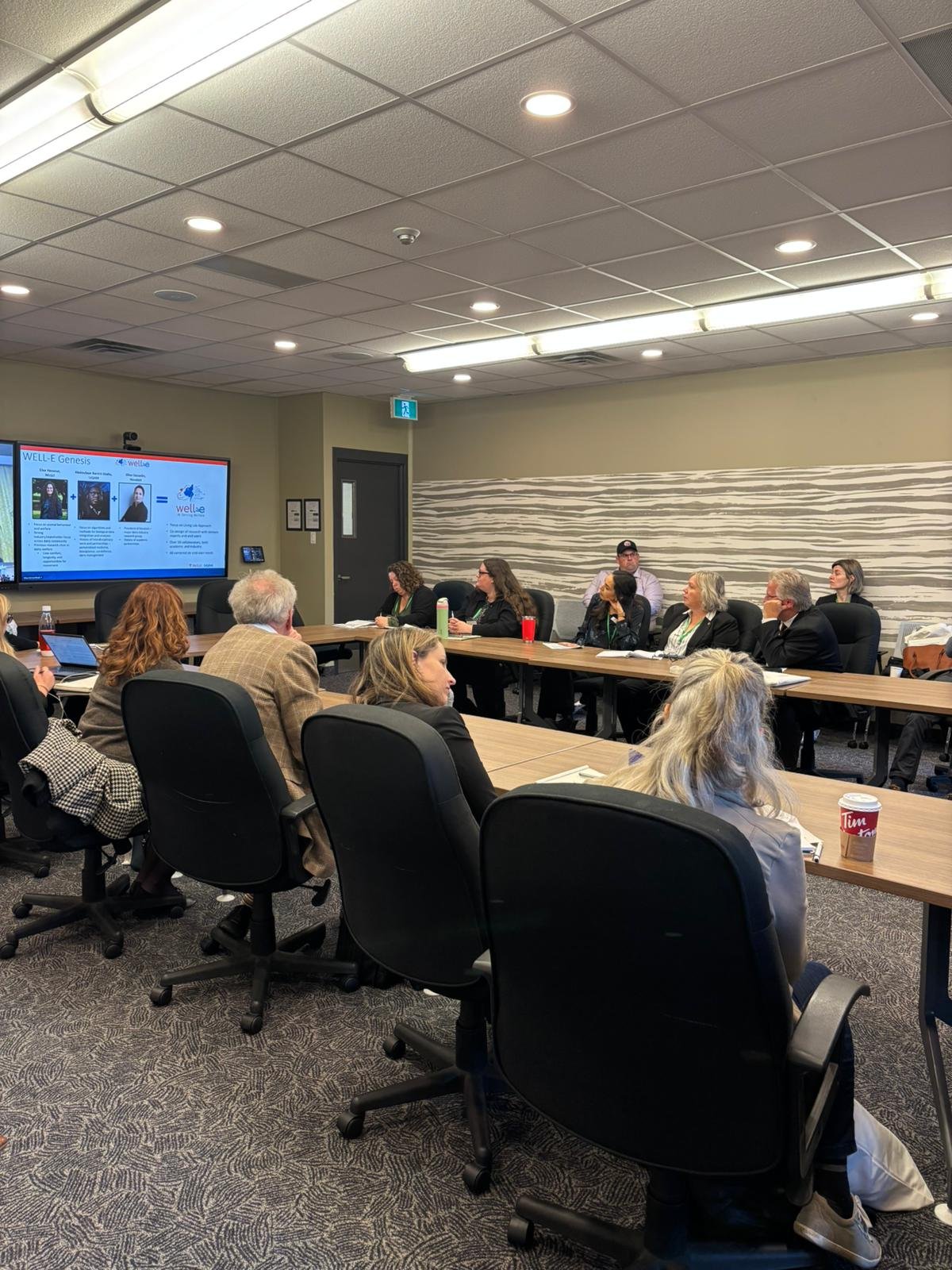
• The WELL-E Approach to Data-Driven Inclusive Innovation: Working with and for the
Canadian Dairy Industry
Elsa Vasseur
• Mapping Technology Use in the Canadian Agriculture Extension Ecosystem
Carlene Schneider

Misinformation in Agricultural ContextsMisinformation in Agricultural Contexts

• Understanding the Misinformation Paradox: How Do False Agricultural Narratives
Shape Farmer Decisions in Ghana’s Planting for Food and Jobs Policy?
Edward Asafo-Agyei*; Ataharul Chowdhury
• Understanding Gendered Dimensions to Agricultural Misinformation on Climate
Change Adaptation in Nigeria
Uduak Edet*; Khondokar Kabir; Nasir Khan
• Dual Challenge of Climate Change and Misinformation: How Misinformation Shapes
Vulnerability and Adaptation in Rural Communities in Pakistan
Nasir Khan
• The Influences of Misinformation on the Participation of Rural Young People with
Disabilities in Agriculture in Bangladesh
Sultana Yeasmin
• Addressing Information Disorder on Climate-Smart Agriculture: Rethinking Advisory
and Extension Services for Sustainable Rural Development in Nigeria.[ONLINE]
Kehinde Oladeji

Communication, Trust, and Networks

• Toxicity and Misinformation: Drivers of Social Media Discontinuation and
Implications for Facilitating Agricultural Innovation in Ontario
Khondokar Kabir*; Ataharul Chowdhury; Tyler Zemlak
• Public Trust as Infrastructure: Reframing the Role of Institutions in Canada’s Food and
Rural Systems
Lisa Bishop-Spencer*; Ashley Bruner
• IFAD and Farm Radio International’s Participatory Dialogues in Sub-Saharan Africa
Eleanor Barlow*; Rachel DeHaan; Carmina Marquez
• Use of Network for Diffusion and Adoption of Climate Smart Agricultural
Technologies [ONLINE]
Md Rezaul Karim

12:30–13:45

Location : PCH CENTRE

  1. Transformative Water Resources Governance in Wetland Ecosystems: A Systematic
    Review
    Vahid Karimi*, Esmail Karamidehkordi, Homayon Farhadian, Masoud Bijan
  2. Youth Typologies and Career Choices in Agricultural Value Chains: A Study of
    University of Ghana-Leventis Farmers’ Training Program’s (UG-LFTP) Participants
    Isaac Alvin Amoah*
  3. Farmers’ Perception of Climate Change and Adoption of Alternate Wetting and Drying
    Irrigation Technology for Rice Production in the Northwest Bangladesh
    Mohammad Anamul Haque*; M. Zulfikar Rahman; Md. Harun-Or Rashid; Md Rakibul
    Hasan; Mohammad Amir Hamza Miah
  4. Evaluating Best Management Practices for Nutrient Load Reductions in Tile-Drained
    Watersheds of the Laurentian Great Lakes Basin: A Literature Review
    Md Bodruddoza*
  5. Adoption of Organic Vegetable Farming Practices among Farmers in Mymensingh
    District of Bangladesh
    Abdul Mannan*; Mahmuda Akter; Mohammad Anamul Haque
  6. Province-led Agriculture and Fisheries Extension System (PAFES) in the Philippines:
    Approaches, Rationale, Objectives, Framework, Strategies, Opportunities and
    Challenges
    Gideon Binobo*
  7. Sustainable Energy Solutions for Greenhouse Agriculture: The Role of Ag Energy Co
    Operative to Producers of Ontario’s Vegetable Sector
    Paul Asare Anim*
  8. Building the Capacity of Agricultural Extension Personnel for Effective
    Implementation of Agricultural Transformation Agenda in Nigeria
    Oludotun Oludotun*
  9. Farmers’ Adoption of Drought Tolerance Varieties of Rice in Dinajpur District of
    Bangladesh
    Md Rezaul Karim*
  10. Language Revitalization of the Six Nations of the Grand River: Indigenous-led
    Development
    Yuka Kazama*
  11. Carib. Farm – Digital Knowledge-Sharing Solution for Farmers
    Laura Macneil*
  12. Barriers, Perceptions, and Solutions in the Dissemination of Horticultural Cultivars: Insights from Farmers and Experts in Iran

    Saeedeh Nazari Noghabi*

13:45–15:15

Location : PCH CENTRE

The Scottish Model of Extension, Advisory Services, and Education: What Can We
Learn for Canadian Systems?”

Facilitator: Ataharul Chowdhury & Heather Watson
Chloe McCulloh & Jennifer Struthers, Scotland’s Rural College
Tracy Evans, Ministry of Agriculture, Executive Director, Regional Services Branch,
Saskatchewan Ministry of Agriculture

15:15–15:40

Location : PCH

15:45–17:30

PARALLEL (ROUNDTABLE & PROFESSIONAL DEVELOPMENT) SESSION II

• Emerging Lessons from Gender-Intentional Nature-Based Solutions for Climate
Adaptation (45 minutes)
Helen Hambly Odame*
• Cultivating Growth in Northern Ontario Agriculture (45 minutes)
Emily Seed; Rachel Kehoe*

• Grassroots Leadership (45 minutes)
Rachel Telford*
• Trust is the Technology: Mapping the Actor-Network for Rural Knowledge Exchange
(45 minutes)
Melisa Luymes*

  • Growing Extension Capacity and On-Farm Climate Resilience in Canada (60 minutes)
    Rosalie Gillis-Madden *; Geneviève Grossenbacher

• Empowering Farm Business Success: Engaging Farmers Through Evolving Extension
and Advisory Services (60 minutes)
Heather Watson*
• Turning Soil Health Tests into Tools Farmers Use: Can it be done? (30 Minutes)
Heather White *; Jake Munroe; Stephanie Vickers; Laura Van Eerd

• Digitalization and Responsible Use of AI to enhance capacity for Agri-food Systems (60
Minutes)
Laura Macneil*, roundtable with Rozita Dara, Neil A. Smith, Tomaso Ceccarelli, & Shelley Seed
• Beyond the Farm Gate: Engaging Publicly with Purpose and Impact (30 minutes)
Amanda Richardson*

18:00–20:30

Location : Science Complex Atrium

08:00–08:45

Location : TBA

9:00–10:30

Parallel (Abstract) Session III
Thursday,

Indigenous Knowledge and Food Systems

• The Community Citizen Scientist: The Garden Stewards in First Nation in Northern
Ontario, Case Study)
Paul Benalcazar*, Silvia Sarapura– Escobar, Charlotte Potter, Justina Walker, Seth Sabourin, Pic Mobert First Nation Community  et al.
• Braided and Interdisciplinary Approaches to Indigenous Food Systems for Food
Security and Sovereignty
Paul Benalcazar* Silvia Sarapura – Escobar, Charlotte Potter, Margarita Fontecha
• Local and Indigenous Knowledge Systems in the Peruvian Andes: Turno Cultivation in
the Campesino Communities of Huancachi and Quilcas
Charlotte Potter* Silvia Sarapura-Escobar
• Indigenous Wild Rice Systems and One Health: A Scoping Literature Review
Muireann Heuchan*; Margarita Fontecha; Natalia Berti; Silvia Sarapura Escobar

Social Inclusion and Marginalized Groups

• Cultivating Inclusion: Empowering Farmers with Disabilities for a Thriving Future
Jeanelle Joseph*; Tessa Barry
• 2SLGBTQ+ Discrimination and Community Integration in Perth and Huron Counties
Daniel Layden*; Leith Deacon
• Inclusive Extension-based Strategies to Support Historically Marginalized Black,
Indigenous & People of Color (BIPOC) in 21st Century’s American Agri-food System:
Samrat Sikdar*; Kirk Swortzel
• Trust is the Technology: Applying Actor-Network Theory for social inclusion in Ontario agriculture
Melisa Luymes*

Extension for Climate Adaptation

• Assessing the Knowledge of Extension Agents in Facilitating Climate Adaptation
Strategies among Farmers in Ekiti State, Nigeria [ONLINE]
Oluwaseun Bamigboye*; Imisi Omokunga
• Learning Needs of Agriculture Extension Agents Regarding Agro-Ecology in Punjab,
Pakistan
Muhammad Ali
• Assessing Farmer’s Preparedness to Cope with the Effects of Multiple Climate Change
Related Hazards in Ghana
Enoch Kwame Tham-Agyekum*; Richard Obed Dankyi; Ebenezer Osei Jones;
Camillus Abawiera Wongnaa

Climate Resilience and Transformation

• When the Trojan Horse Enters the Castle of Resilience: Rethinking Agricultural
Extension to Avoid Risk of Maladaptation to Climate Change
Davoud Rouzaneh*; Moslem Savari; Sadegh Rahmani [Online]
• Cultivating Collaboration: Building effective partnerships for farm climate change
resiliency and stewardship success
Fallon Hayes*; Jessie Spasov; Melanie Williams
• Building On-Farm Resilience and Lowering Emissions Across Canada
Rosalie Gillis-Madden*; Andrew Rushmere; Crystal Arsenault; Brenda Hsueh
• Exploring Prince Edward Island Beef Farmer Perceptions of Participation in Climate
Change Mitigation
Maggie McCormick; Ataharul Chowdhury; Nasir Khan*

Agroecology and BMP Adoption

• Farmer-led research to support the adoption of agro-ecological practices in Ontario
Sarah Larsen *; Erin Nelson
• Not all BMPs are created equal: No Regret, Neutral, Sacrifice and Dead End BMPs
David Rourke
• Uncovering Successes and Gaps: Exploring the Landscape of Learning and Knowledge
Transfer in Grassland Management
Brooke McWherter*; Amber Dyck; Emma Brooks
• Understanding how Canadian producers use information sources to inform their
adoption of beneficial management practices
Matt Blackshaw*; Kieran Findlater; Sandra Znajda

Soil Health and Networks

• The Role of Not-for-Profit Organizations in Extension Delivery: The Case of the
Ontario Soil Network
Paige Allen; Lorraine Vandermyden*; Baran Karsak; Erin Nelson
• The Social Side of Soils: a Farmer Centered Analysis on the Adoption of Cover Crops
Paige Allen
• Bringing Soil Health Assessment to Farmers in Ontario’s Golden Horseshoe
Ryan Carlow*; Paul Smith; Adam Hayes; Jenny Bower; Jake Munroe
The Power of Observability: Rethinking Soil Health Information Networks and Extension Through the Voices of Southern Ontario Farmers
Heather White

10:30–11:00

Location : PCH

11:00–12:30

PARALLEL (ROUNDTABLE & PROFESSIONAL DEVELOPMENT) SESSION IV

• Rural Economic Development: Ontario Ministry of Rural Affairs’ Approach to Capacity
Building (45 Minutes)
Karla Uliana*
• Effective Extension in Practice: Rethinking Ag Knowledge Mobilization through
Training and Multimedia (45 minutes)
Toban Dyck*, Jay Whetter

• Connecting Traditional and Non-Traditional Players in Extension to Drive Sustainability
Outcomes (45 minutes)
Janice LeBoeuf *; Christoph Wand, Panel Discussion with Nick Betts, Monica Hadarits & Mohamad Yaghi
• The North American Agricultural Advisory Network: Strengthening Extension Through
Cross-Border Collaboration (45 minutes)
David Nielson*, Panel Discussion with, Doug Steele, Jennifer Wright

• Modernizing Agricultural Extension: Introducing Root, a Digital Platform for Canadian
Producers (45 minutes)
Richard Hilton* Mark Redmond*  & Mohamad Yaghi
• LLMs for Ag Advisory: Opportunities, Limitations, and Practical Application (45
minutes)
Mahla Mirali*

• Externships in Capacity Development and Extension: Reflect and Review (30 minutes)
Helen Hambly* (45 minutes)

12:30–13:45

Location : PCH CENTRE

13:45–15:30

Location : PCH CENTRE

Digitalization and Artificial Intelligence in Agri-food Advisory, Extension and
Education: Lessons Learned and Ethical Considerations

Facilitator: Ataharul Chowdhury
Greetings: The Honourable Lisa Thompson, MPP, Ontario Minister of Rural Affairs
Panelists

Prof Klerkx Laurens, University of Talca, Chile, and Wageningen University
Dr Elsa Vasseur, McGill University
Mohamad Yaghi, Vice President of Innovation Hub and Agexpert at Farm Credit
Canada

15:30–15:55

Location : PCH

16:00–17:30

Parallel (Abstract) Session V
Thursday, October 30

16:00 – 17:30

Living Labs and Innovation Systems

• Agroecosystem Living Labs: Participant Experiences and Innovation Dynamics in
Canada
Madeleine Arseneau*; Ann Levesque; Margaret Bancerz; Chris McPhee; Albana
Berberi; Caroline Thivierge
• Understanding Collaboration Among Stakeholders in the Newfoundland and Labrador
Living Lab Project as a Transdisciplinary Approach
Bethel Chukwukere*; Emily Doyle; Kelly Vodden
• Advancing Dairy Extension: A Digital Living Laboratory Approach to Knowledge
Mobilization in the Canadian Dairy Sector
Steven Roche
• Building knowledge and innovation systems in Ukraine: critical reflections from
practice
Sarah Cardey

Food Security and Systems

• Impact of Climate Resilient Agricultural Practices on Food Security for Small- Scale
Farmers in High Barind Tract of Bangladesh
Mohammad Anamul Haque*; Md. Golam Azam; Md. Masud; Doel Rose Mary Kha;
Kakan Barua
• Food Security Status of Landless Farmers in the Char Areas of Northern Bangladesh
Md. Aminur Rahman; Mohammad Anamul Haque*; Md Abdul Mannan

Extension Models and Policies

• Global Perspectives on Public-Private Collaborations in Agricultural Extension
Lauren Benoit
• Stakeholder Perceptions of Pluralistic Extension and Advisory System in Ontario
Khondokar Kabir*; Ataharul Chowdhury
• Agricultural Extension Systems in a Crossroad: Structural Differences, Implications,
and Future Pathways in Canada and the United States
Khondokar Kabir*; Ataharul Chowdhury
• The Quebec Model of Agricultural Extension: A Publicly Led and Regionally Driven
Approach through the Programme services-conseils
Helen Jensen*; Marie-Claude Lapierre

Approaches, Theories, and Evaluation

• Integrating Community-Engaged Learning (CEL) into Extension Program
Development: Bridging Theory with Practice
Nesma Osman
• Rourke’s General Farm Practice Change Theory: A Pull Approach
David Rourke
• Participatory Action Research as a KTT Tool: Early Reflections
Derya Tarhan
• Developing an Evaluation Framework to Assess the Effectiveness of Extension
Programs

Institutions, Advisors, and Assessment

• The Role of Professional Advisors in Slowing or Preventing Development of Future
Farmers in Canada: What if We’re Part of the Problem?
Patti Durand
• Assessment of agri-environmental extension services in Canada for Agriculture and
Agrifood Canada
Kristelle Audet
• Facilitating Change on the Agricultural Landscape through a Communities of Practice
Extension Model
Dorthea Gregoire

Education, Learning, and Youth Engagement

• Innovative Pathways to Biotechnology Careers: Youth Engagement Through 4-H Clubs
and Interactive Games [ONLINE]
Stacey Stearns*; Jennifer Cushman; Sharon Gray; Xiuchun “Cindy” Tian; Cristina
Connolly
• Encouraging Knowledge Diffusion through the Peer Group Learning Model
Natasha Wilkie*; Adriane Good; Alexis DeCorby; Kathy Larson; Fonda Froats
• Doing it Better! Practitioner Insights to Enhance KTT for Private Water Wells
Negin Molaei; Sheri Longboat*; Hugh Simpson*

18:00–20:30

Location : Science Complex Atrium

Facilitator: Ataharul Chowdhury
Deb Stark, The Board of Governors, University of Guelph (incoming chair)

Dr. John Cranfield, Dean, Ontario Agricultural College

08:00–08:45

Location : TBA

9:00–10:30

Parallel (Abstract) VI

Entrepreneurship and Barriers in Agri-Development

• Exploring rural youth aspirations and life-courses in Colombia
Margarit Fontecha*; Silvia Sarapura-Escobar  [ONLINE]
• Unravelling Farmer Preferences for Contract Design Attributes in Ghana’s Agricultural
Sector: A Discrete Choice Experiment Approach
Dominic Boateng-Gyambiby*; Sabine Liebenehm; Emmanuel Alirah Weyori
• The institutionalization of farmer Field Schools in Latin America
Silvia Sarapura – Escobar
• Participatory Systems Mapping. Drivers and Barriers identification in adopting BMP
for potato producers in Southern Ontario using Gephi Visual
Paul Benalcazar

Rural Development and Innovation

• Participatory evaluation of ecosystem transformation: lessons for rural advisory and
extension services
Elin Gwyn*; Ricardo Ramirez
• Impact of the Implementation of Best Practices from the Local Agricultural Innovation
Project (PIAL) in Pinar del Río, Cuba
Yuliany Pacheco
• Adding more plant-forward dishes to menus: Findings from a survey of post-secondary
campus food services across Canada
Sunghwan Yi*
• Exploring the Possibilities of Extension to Advance Research Use: Lessons from
Virginia, USA [ONLINE]
Lia Kelinsky-Jones*; Christina Galardi; Sarah Baughman

Navigating Change: Understanding Transformations in Rural Economic Development Knowledge Translation and Transfer
Ryan Gibson*; Taylor Wilson; Jayden Cote

Animal Welfare, Livestock, and Sustainability

• Goat and Sheep Farmers’ Stress During the COVID-19
Dr. Suzanna Windon*; Carolyn Henzi
• What is the impact of economic institutions in the New Zealand pastoral farming
sector?
Angela McFetridge*; Hamish Gow; Robyn Dynes
• Measure it and they will come: Using rising plate meters to improve grazing
management in Ontario pastures
Caroline Reisiger*; Christine O’Reilly; Kim Schneider

Sustainable Development and Ecosystems

• Climate Justice as a Pathway to Sustainable Development: A Content Analysis Review
Vahid Karimi*, Esmail Karamidehkordi, Homayon Farhadian, Masoud Bijan
• Ecosystem Modeling of Kaptai Lake, Rangamati: A Mass-Balance Approach Using the
Ecopath Model [ONLINE]
Keya Chakma*; Mohammed Shahidul Alam
• Study of Adaption Methods Climate Change through Localization of Resilience among
Farmers (Case Study: Village of Markazi Province) [ONLINE]
Maryam Moghaddasi*; Arefeh Abbasifard

10:30–11:00

Location : PCH

11:00–12:30

Location : PCH CENTRE

Closing & Plenary III
Dr. John Cranfield, Dean, Ontario Agricultural College
Facilitator: Ataharul Chowdhury & Rebeca Lee
Panelists
The Honourable Robert Black, P. Ag. (Hon), Senator for Ontario
Keith Currie, President, Canadian Federation of Agriculture

Brent Preston, President, Farmers for Climate Solutions

14:00–16:00

Location : PCH CENTRE

Facilitator: Khondokar Humayun Kabir & Ataharul Chowdhury

CAREE 2026 · Extension & Advisory Services

Symposium Program

Full-day schedule · 8:00 AM – 5:00 PM

8:00 AM

Registration

60 MIN
9:00 AM

Welcome and Opening Remarks

30 MIN
9:30 AM

Opening Presentation

30 MIN
10:00 AM

EAS in the Crop Sector

60 MIN
11:00 AM

EAS in the Livestock Sector

60 MIN
12:00 PM

Lunch

30 MIN
12:30 PM

EAS in Farm Management and Integration for Decision-Making

60 MIN
1:30 PM

Addressing Equity and Inclusion

30 MIN
2:00 PM
Anchor Session

Reimagining Capacity Building in EAS: Extension Education, Knowledge Systems, and the CAREE 2027 Agenda

2.5 HRS
Session details
This session will foster discussion on education and capacity-building initiatives in EAS in Canada, with particular attention to how academic programs, professional training, and experiential learning platforms are preparing the next generation of educators, extensionists and advisors to operate in increasingly complex, digital, and cross-sectoral environments. This includes exploring gaps in current curricula, opportunities for interdisciplinary training, and mechanisms to strengthen linkages among research, practice, and policy.

In this context, the symposium will also highlight the role of emerging knowledge platforms, such as the CAREE Journal, in advancing scholarship and practice in extension and advisory services, and will help shape the agenda for CAREE 2027 as a forum for collaboration, innovation, and knowledge exchange in this evolving field.

Format — Panel discussion · Presentations · Workshop session

4:30 PM

Wrap Up and Next Steps

30 MIN
5:00 PM

Close

Important Parking Details

Parking lot P11 is reserved for conference participants on the 29th, 30th, and 31st.

Directions to the University Centre:

Parking lot P11 is located at the corner of East Ring Rd. and South Ring Rd. From P11, head West along South Lane and turn right on Winegard Walk. Continue North on Winegard Walk and the University Centre will be on your left.

See walking directions here

Conference Program Committee

Ataharul Chowdhury

University of Guelph (Conference Chair)

Ashley Honsberger

Canadian Alliance for Net-Zero Agri-food

Angela Straathof

Ontario Soil and Crop Improvement Association

Charlotte Wall

Poultry Industry Council

Christine Baes

University of Guelph

Derya Tarhan

University of Guelph
David Nielson

North American Agricultural Advisory Network
Dieudonne Harahagazwe

ZeroHunger Consulting

Erin Nelson

University of Guelph
Elsa Vasseur

McGill University

Edel Pérez Lopez

Université Laval

Fally Masambuka-Kanchewa

Iowa State University

Fattane Zarinkalam

University of Guelph

Gordon Gow

University of Alberta

Getu Hailu

University of Guelph

Helen Jensen

Coordination Services-Conseils

Heather Watson

Farm Management Canada

Heather White

Soils at Guelph

Isaac Agholor

University of Mpumalanga

Jean Howden

Livestock Research and Innovation Corporation

Kelly Somerville

Livestock Research and Innovation Corporation

Khondokar Kabir

University of Guelph

Madeleine Arseneau

Agriculture and Agri-food Canada

Megan Sipos

Greenbelt Foundation

Mary Feldskov

Grain Farmers of Ontario

Marie-Claude Lapierre

Coordination Services-Conseils

Mahla Mirali

Grain Data Solutions
M. Salim Uddin

University of Vermont

Milad Zhoolideh

University of Guelph

Md Mahatab Uddin

University of Guelph

Maggie McCormick

PEI Federation of Agriculture

Lawrence Goodridge

University of Guelph

Nasir Khan

University of Guelph

Olivia Wilkins

University of Manitoba

Paige Allen

Ontario Soil Network

Silvia Sarapura

University of Guelph

Sadaf Mollaei

Arrell Food Institute

Sarah Cardey

University of Reading

Steve Roche

Acer Consulting

Sandra K. Znajda

Agriculture and Agri-food Canada

Sara Epp

University of Guelph

Suzana Windon

The Pennsylvania State University

Sophie Krolikowski

Agriculture and Agri-food Canada
Tracy Evans

Ministry of Agriculture, Saskatchewan

Salman Razavi

Grain Data Solutions

Robin Smart

Ontario Ministry of Agriculture, Food and Agribusiness

Sabine Liebenehm

The University of Saskatchewan

Ranjan Datta

Mount Royal University

Saeedeh Nazari Nooghabi

Agricultural Research, Education and Extension Organization

Ryan Gibson

University of Guelph

RJ Taylor

Ontario Aquaculture Association

Ryan Carlow

Greenbelt Foundation

Rebecca Lee

Advocating for Resilient Communities and Sustainable Agri-food Systems

Rebecca Dunn

Agri-food Innovation Alliance

Rebecca Moore

Agri-food Innovation Alliance

Tracy Kittilsen

Dalhousie University

Uduak Edet

University of Guelph

Ramtin Shafaghati

University of Guelph

Asim Biswas

university of guelph
Submission Guidelines

Researchers, educators, students, government officials, policymakers, advisory professionals, producer organizations, community-based organizations, technology/input providers and farmer leaders are invited to submit proposals. A Canadian conference focusing on local, provincial/state, regional and international issues related to agriculture & rural advisory, extension and education

Submit your abstracts for presentations and posters. Check the page for author guidelines and instructions for submission

Submit proposals for professional development sessions, workshops, and roundtable discussions. These sessions are for advancing critical discussions and skill-building. 

Conference Topics:

Topic 1

Policy, approaches, trends and evidence-based action

Topic 2

Digitalization and responsible use of AI in advisory services and education

Topic 3

Indigenous and Northern development, gender, social inclusion, and well-being of agricultural and rural communities

Topic 4

Extension, education, and institutional capacity for driving agri-food systems transformation

Topic 5

Extension and advisory to facilitate entrepreneurship, bio-economy, food safety, ago-ecology, animal welfare and resilience to climate change

Topic 6

Extension, media, rural and risks communication services

2025 CAREE

Various Ways to Travel to the CAREE Conference in Guelph, Ontario

There are several ways to get to the CAREE conference in Guelph, Ontario! Whether you’re planning to drive, fly, take the bus, or travel by train, we’ve got all the information you’ll need to help you make your way to the event.

HOTEL ACCOMMODATIONS

Hotels Partnered With CAREE

We have partnered with two nearby hotels to offer convenient lodging options for CAREE Conference attendees:

Delta Hotels Guelph Conference Centre

50 Stone Rd W, Guelph, ON N1G 0A9

  • 5 minute bike or 15 minute walk to University of Guelph Building

  • Parking Rate: 2CAD/Hour or 15CAD Daily

  • 5 minute walk to UofG main campus 


Standard Room – 1 King – $239.00 per night (+ 4% MAT and 13% HST)

For reservations click on the following link, Book Your Group/Corporate Rate or call 1-844-496-5849. Reservations must be made by September 29, 2025.

Staybridge Suites

11 Corporate Ct, Guelph, ON N1G 5G5

Standard Room – $179.00 per night (+ 4% MAT and 13% HST)

For reservations click on the following link, Book Your Group/Corporate Rate. Reservations must be made by September 28, 2025.

Fairfield Inn & Suites Guelph

35 Cowan Pl, Guelph, ON N1G 0C1

  • By Car (Approx. 7 minutes)
  • By Public Transit (Approx. 15–25 minutes)
  • By Taxi or Ride-Sharing (Approx. 7–10 minutes)
  • On Foot (Approx. 50–60 minutes / ~4.7 km)

🛏️ More Places to Stay in Guelph

Find the perfect place to relax and recharge during your stay for CAREE in Guelph.


🏨 Hotels

  • Staybridge Suites Guelph by IHG: A 3-star hotel with excellent reviews.
  • 🏛️ Western Hotel & Executive Suites: Spacious suites with historic charm.
  • 🏋️ Hampton Inn & Suites Guelph: Gym, pool, and free shuttle service.
  • 🏠 Super 8 by Wyndham Guelph: Free Coffee & Breakfast Item, Free Wi-Fi, EV Charging, Restaurant, Express Check-out, Early Check-in Available
  •  

🏡 Guest Houses

  • 🌸 Norfolk Guest House Inn: A charming stay with beautiful gardens and cozy vibes.
  • 🍳 Modern Studio with Kitchenette and Bath: Perfect for short stays with homey comfort.

🌐 Websites to Find Accommodation

  • 🔍 Tripadvisor: Explore hotels with reviews and rankings.
  • 💬 Booking.com: Great deals and instant booking.
  • 💸 Trivago: Compare prices and find your perfect stay.

Choose a place that suits your style and budget, and make your stay in Guelph a memorable one!

Transportation to Guelph

There are multiple transportation methods if you will be traveling from the Airport to the University of Guelph:

  • Private Transportation options include Red Car Service, Uber, and Taxi/ Limo Services.
  • Public Transportation options include bus and train.

For more details on getting to Guelph, click here.

We have arranged a special conference rate for you with Red Car Airport Shuttle Service. Select the Red Car Service home page link and enter the booking code: CAREE

Your online booking will include the following discount (per direction) from Red Car’s current published rates:

  • $15.00 – Hamilton International Airport – Shared Ride only
  • $20.00 – Toronto International Airport – Shared Ride or Private
  • $15.00 – Toronto Island Airport – Private only
  • $15.00 – Waterloo International Airport – Shared Ride Only

Your online booking will be billed immediately and you will receive an email confirmation including your check-in location at the airport. You are not booked until you have received a confirmation form with confirmation numbers.

Union Station is booked through the Inter-City Transfer tab of the booking engine.

Getting to the CAREE Conference

Attendees arriving at Toronto Pearson International Airport have several convenient transportation options to reach the CAREE Conference venue:

  • Red Cap Taxi – A reliable airport taxi service offering direct travel to your destination.

  • Uber – Ride-sharing is available from the designated pickup areas at the airport.

  • GO Train – Take the UP Express from Pearson to Union Station, then transfer to a GO Train depending on the conference location.

  • GO Bus – Several GO Bus routes connect Pearson Airport with surrounding regions and transit hubs.

We recommend checking schedules and travel times in advance to choose the option that best suits your needs.

By Car – Road Trip to Guelph!

Guelph is located in southwestern Ontario, approximately 1.5 hours from the Rainbow Bridge at Niagara Falls, NY, USA – the nearest US-Canada border. We encourage carpooling if you decide to drive to the conference this year. If you choose to drive, here are some helpful links for parking information:

On-Campus Parking
Campus parking is managed by Campus Parking Services. For visitor parking details, please refer to the information here.

Downtown Guelph Parking
Managed by the City of Guelph, downtown parking spaces are limited. For more information, please check here.

Note: In Canada, speed is measured in kilometers, not miles.
1 mile = 1.6 km.

By Air – Flying in? We’ve Got You Covered!

Toronto Pearson International Airport (YYZ)
Drive time: Approximately 50 minutes to the University of Guelph campus.
If you’re not driving or using a taxi/rideshare service, you can take the GO Transit.

GO Transit accepts the following payment methods:

  • Interac® Debit card
  • Visa
  • Mastercard
  • American Express credit cards

Other Nearby Airports:

  • Billy Bishop Toronto City Airport (YTZ)
  • Region of Waterloo International Airport (YKF)
  • John C. Munro Hamilton International Airport (YHM)

By Train – Enjoy the Scenic Route! (Sometimes)

Guelph Central Station – Guelph
Drive time: About 10 minutes to the University of Guelph campus.
Guelph Central Station is located in the heart of Downtown Guelph, offering easy access to the University of Guelph campus. The 99S bus from Guelph Transit will take you straight to the University Bus Loop.

This station serves both GO Transit and VIA Rail. For route options, be sure to visit their websites. Please note that services may not be available on weekends.

  • Plan your trip to the CAREE conference with GO Transit
  • Plan your trip to the CAREE conference with VIA Rail

Union Station – Toronto
If you’re coming from Toronto Pearson Airport, the UP Express takes you directly to Union Station. Located in downtown Toronto, Union Station connects you to GO Transit, VIA Rail, Ontario Northland, and Amtrak services to select US destinations.

  • Plan your trip with Amtrak

By Bus – Lower Your Carbon Footprint One Ride at a Time

GO Transit Buses
GO Transit offers direct stops at the University of Guelph bus loop, providing service across southern Ontario.
GO Transit accepts: Interac® Debit card, Visa, Mastercard, or American Express credit cards.

  • Plan your trip to the CAREE conference with GO Transit

FLIXBUS
Although FLIXBUS doesn’t stop directly in Guelph, it offers stops in other southern Ontario locations where you can transfer to GO Transit and continue your journey to Guelph. Common transfer points include Union Station in Toronto or Square One in Mississauga.
FLIXBUS accepts: Credit cards (VISA/MasterCard/Maestro/Amex/Diners Club/JCB/Discover), PayPal, Google Pay, and Apple Pay.

  • Plan your trip to the CAREE conference with FLIXBUS

Getting Around in Guelph

Guelph Transit
Guelph’s city bus network does not accept card payments. Here are the available payment options:

  • Pay with exact cash in Canadian Dollars
  • Purchase a bus fare or OnYourWay fare card at designated locations [here]
  • Use the OnYourWay app to pay for your bus ride

We are excited to have you join us for the CAREE! While you’re here, why not explore the beautiful city of Guelph and nearby attractions? Whether you enjoy nature, culture, shopping, or city adventures, there’s something for everyone.


Explore Guelph

  • Royal City Park: Scenic trails along the Speed River, perfect for a relaxing walk.
  • University of Guelph Arboretum: Gorgeous botanical gardens, walking trails, and a natural escape.
  • Guelph Civic Museum: Discover the rich history of Guelph through engaging exhibits.
  • Downtown Guelph: Charming streets with unique shops, cafes, and restaurants.
  • Riverside Park: Beautiful gardens, walking paths, and a nostalgic carousel.

Day Trips and Nearby Attractions

📍 Toronto (1-hour drive)

  • CN Tower: Iconic skyline view.
  • Ripley’s Aquarium: Fun for all ages.
  • Distillery District: Historic cobblestone streets with boutiques and restaurants.
  • Royal Ontario Museum (ROM): World-class exhibits in art, culture, and nature.

📍 Niagara Falls (1.5-hour drive)

  • One of the world’s most famous waterfalls — breathtaking views and boat tours.

📍 Stratford (45-minute drive)

  • Famous for the Stratford Festival and a charming downtown atmosphere.

📍 Elora (20-minute drive)

  • Elora Gorge: Stunning cliffs and scenic river trails.
  • Elora Mill: Boutique hotel and spa for a luxury escape.

📍 St. Jacobs (30-minute drive)

  • Quaint village famous for its Farmers’ Market and Mennonite heritage.

We hope you have an unforgettable conference experience — and that you take a little time to enjoy everything this beautiful region has to offer!

Suggestions for VISA:

If you need a Canadian VISA you can consult with the Immigration and Citizenship Canada website [https://www.canada.ca/en/services/immigration-citizenship.html].

To apply online, you must first sign in or create an account. If you want to apply by yourself, use Option 1: GCKey. Sign up for an account and then log in. Then, under the Start My Application option, click to apply to come to Canada. You must click on “visitor visa, study or work permit” under determine your eligibility and apply online. Then you’ll have to answer a series of questions to find out what kind of visa you need. The rest of the application should be completed after this eligibility check.

Looking to get involved?

Join other organizations and industry leaders to make this inaugural event possible. By taking on one of our exclusive sponsorship opportunities, you will help reduce the costs of organizing this conference and demonstrate your commitment to the various activities taking place throughout the event. This is more than just sponsorship; it’s an opportunity to elevate your brand, connect with other key players, and position your organization as a leader in shaping the future of agricultural & rural advisory, extension and education in Canada and worldwide. If you are interested in sponsorship, please reach out to the conference chair, Ataharul Chowdhury, at chowdhua@uoguelph.ca by August 31, 2025, and confirm the sponsorship using the following link. 

There is a limited number of sponsorships available. So, please contact and confirm your support. 

Confirm Sponsorship

After confirming the sponsorship, please email the logo to caree@uoguelph.ca

Platinum

$10,000
  • Booth in Innovation Exhibit (~8’X8′ space with a ~5′ table and two chairs and one (1), 110v, 1-amp duplex outlet )
  • Full-page ad & banner display
  • Logo on website & materials
  • 10-min speaking opportunity
  • Social media recognition
  • 3 complimentary registrations

Gold

$7,000
  • Half-page ad & tabletop space
  • Logo on website
  • 5-min speaking opportunity
  • Social media recognition
  • 2 complimentary registrations


Silver

$5,000
  • Half-page ad & tabletop space
  • Logo on website
  • Event sponsor mention
  • Social media recognition
  • 2 complimentary registrations


Bronze

$3,000

  • 1/4 page program ad
  • Signage & logo on website
  • Social media recognition
  • 1 complimentary registration


Reception / Break

$3,000
  • Event sponsor mention
  • Signage & logo on website
  • Social media recognition
  • 1 complimentary registration

Lanyard Sponsor

$3,000
  • Partner provides lanyards
  • Signage & logo on website
  • Social media recognition
  • 1 complimentary registration
 

Exhibitor

$3,000
  • Booth in Innovation Exhibit (~8’X8′ space with a ~5′ table and two chairs and one (1), 110v, 1-amp duplex outlet )
  • Logo on website
  • Social media recognition
  • 1 complimentary registration


CAREE Teams Meeting  – October 29

Opening & Keynote (PCH Main)


Watch Video

AI in Agriculture Extension and Advisory


Watch Video

Communication, Trust, and Networks


Watch Video

Decision Support System and Data-Driven Innovation


Watch Video

Digital Communication Platforms and Tools


WatchVideo

ICT Adoption and Precision Technologies


Watch Video

Misinformation in Agricultural Contexts


Watch Video

The Scottish Model of Extension, Advisory Services and Education


Watch Video

RoundTable & Professional Development Session II-A


Watch Video

RoundTable & Professional Development Session II-B


Watch Video

RoundTable & Professional Development Session II-C


Watch Video

RoundTable & Professional Development Session II-D


Watch Video

RoundTable & Professional Development Session II-E


Watch Video

CAREE Teams Meeting  – October 30

Agroecology and BMP Adoption


Watch Video

Climate Resilience and Transformation


Watch Video

Extension for Climate Adaptation


Watch Video

Indigenous Knowledge and Food Systems


Watch Video

Social Inclusion and Marginalized Groups


Watch Video

Soil Health and Networks


Watch Video

RoundTable & Professional Development Session: IV-A


Watch Video

RoundTable & Professional Development Session: IV-B


Watch Video

RoundTable & Professional Development Session: IV-C


Watch Video

RoundTable & Professional Development Session: IV-D


Watch Video

Digitalization and Artificial Intelligence in Agri-food Advisory


Watch Video

Approaches, Theories and Evaluation


Watch Video

Education, Learning and Youth Engagement


Watch Video

Extension Models and Policies


Watch Video

Food Security and Systems


Watch Video

Institutions, Advisors, and Assessment


Watch Video

Living Labs and Innovation Systems


Watch Video

CAREE Teams Meeting – October 31

Animal Welfare, Livestock, and Sustainability


Watch Video

Entrepreneurship and Barriers in Agri-Development


Watch Video

Rural Development and Innovation


Watch Video

Sustainable Development and Ecosystems


Watch Video

Closing Session


Watch Video

What Canada Can Learn from Scotland’s Integrated Agricultural Extension System

A great read from John Greig at Farmtario highlights the striking contrast between Scotland’s unified agricultural extension model and Canada’s […]

The Heart Behind CAREE 2025: Our Incredible Volunteers 💚

Behind every successful conference are the people who make it all happen — and at the 1st International Conference on […]

Moments to Remember: Highlights from CAREE 2025

The 1st International Conference on Canadian Agri-food & Rural Advisory, Extension, and Education (CAREE) brought together researchers, practitioners, and leaders […]
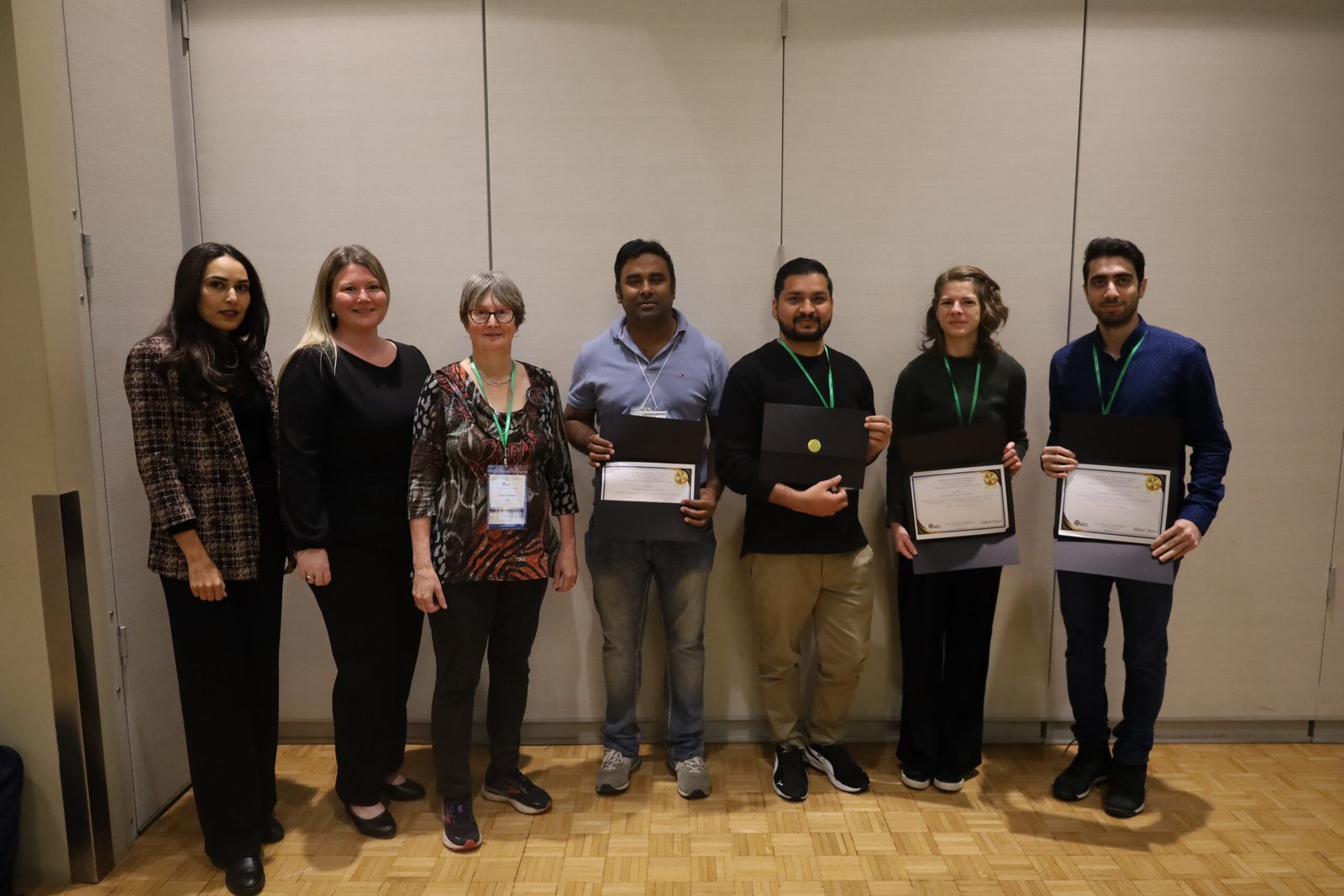
Celebrating Excellence: Best Research and Presentation Awards at CAREE 2025

Amid the inspiring discussions and shared discoveries at the 1st International Conference on Canadian Agri-food & Rural Advisory, Extension, and […]
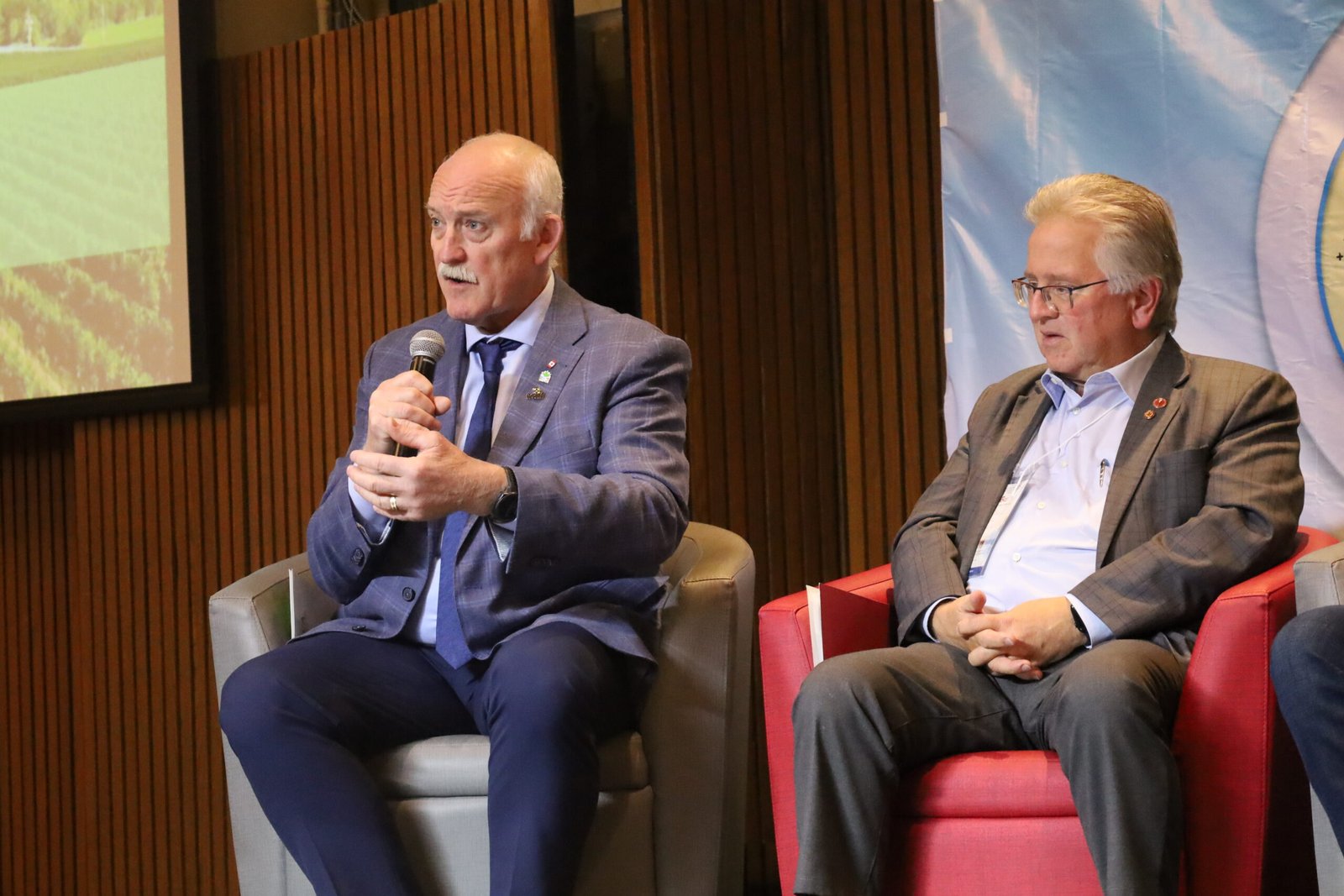
Closing the Circle: Reflections from the Final Session at CAREE 2025

As the 1st International Conference on Canadian Agri-food & Rural Advisory, Extension, and Education (CAREE) drew to a close at […]
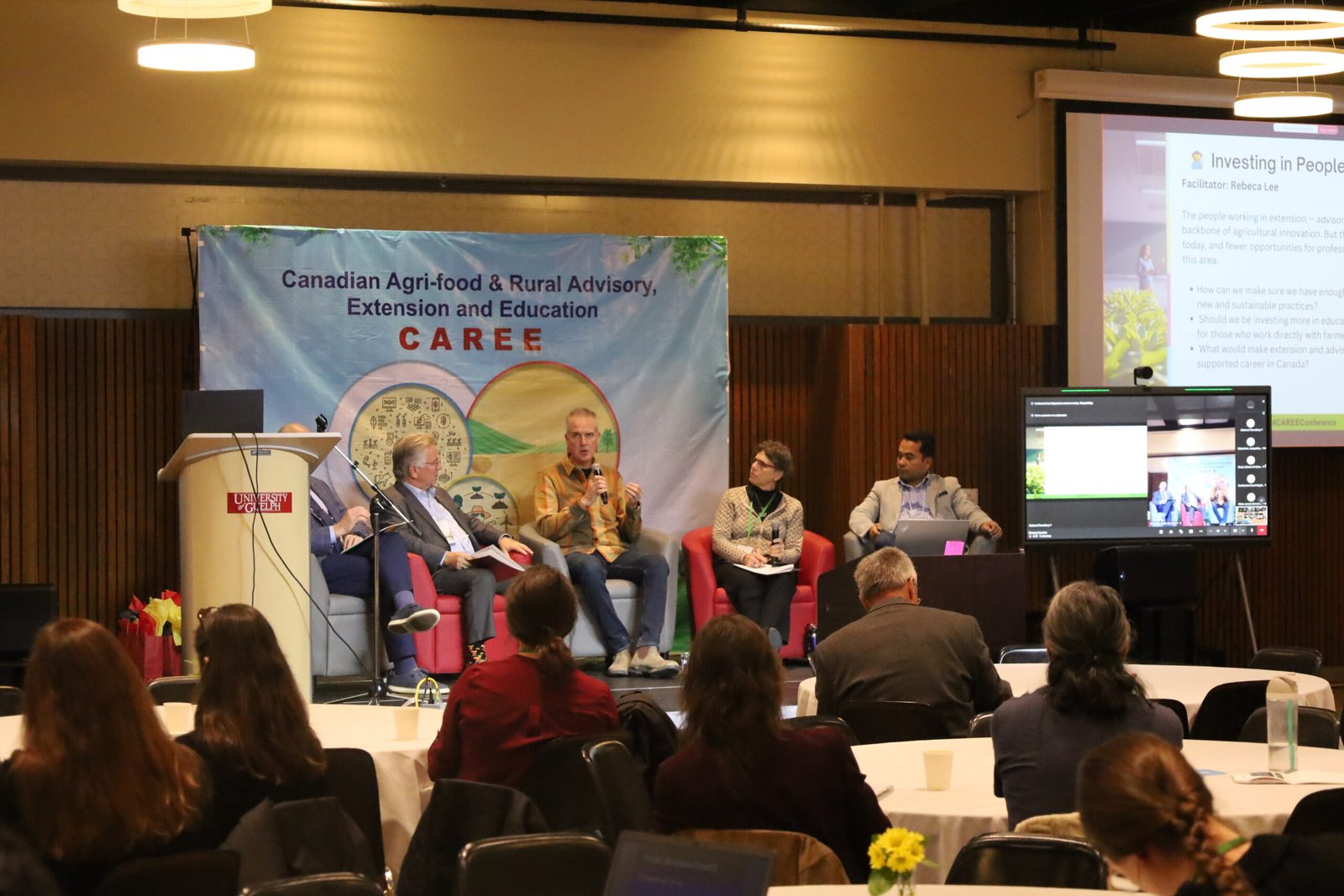
Closing Session: Opening New Doors for the Future of Agriculture

The Closing Session of the 1st International Conference on Canadian Agri-food & Rural Advisory, Extension, and Education (CAREE) marked a […]
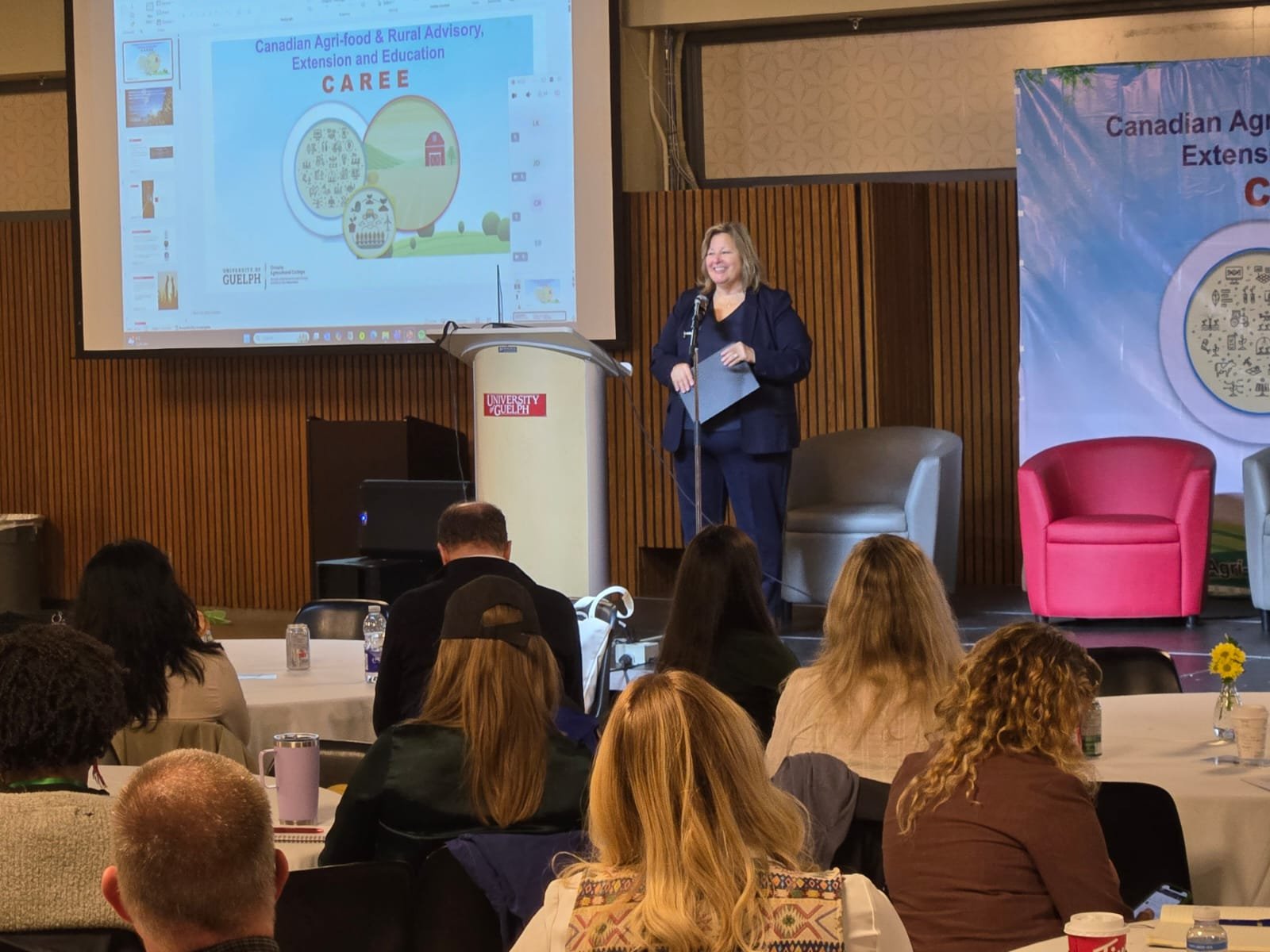
Minister Lisa Thompson Joined CAREE Plenary

The 1st International Conference on Canadian Agri-food & Rural Advisory, Extension, and Education (CAREE) was honoured to welcome The Honourable […]
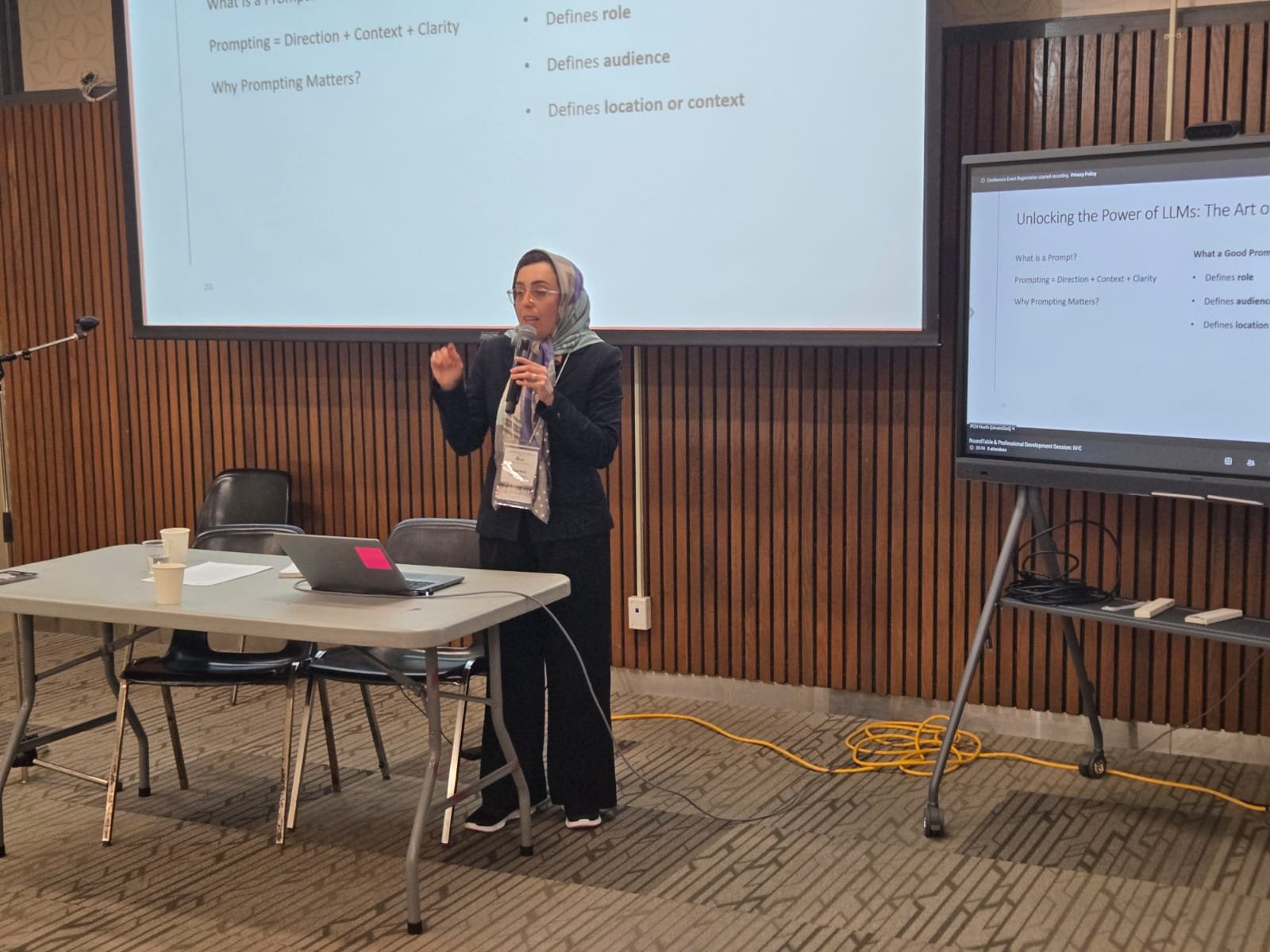
Innovating Agricultural Extension: Session IV-C Highlights

During Roundtable & Professional Development Session IV-C at CAREE 2025, participants explored how technology and innovation are transforming agricultural extension […]
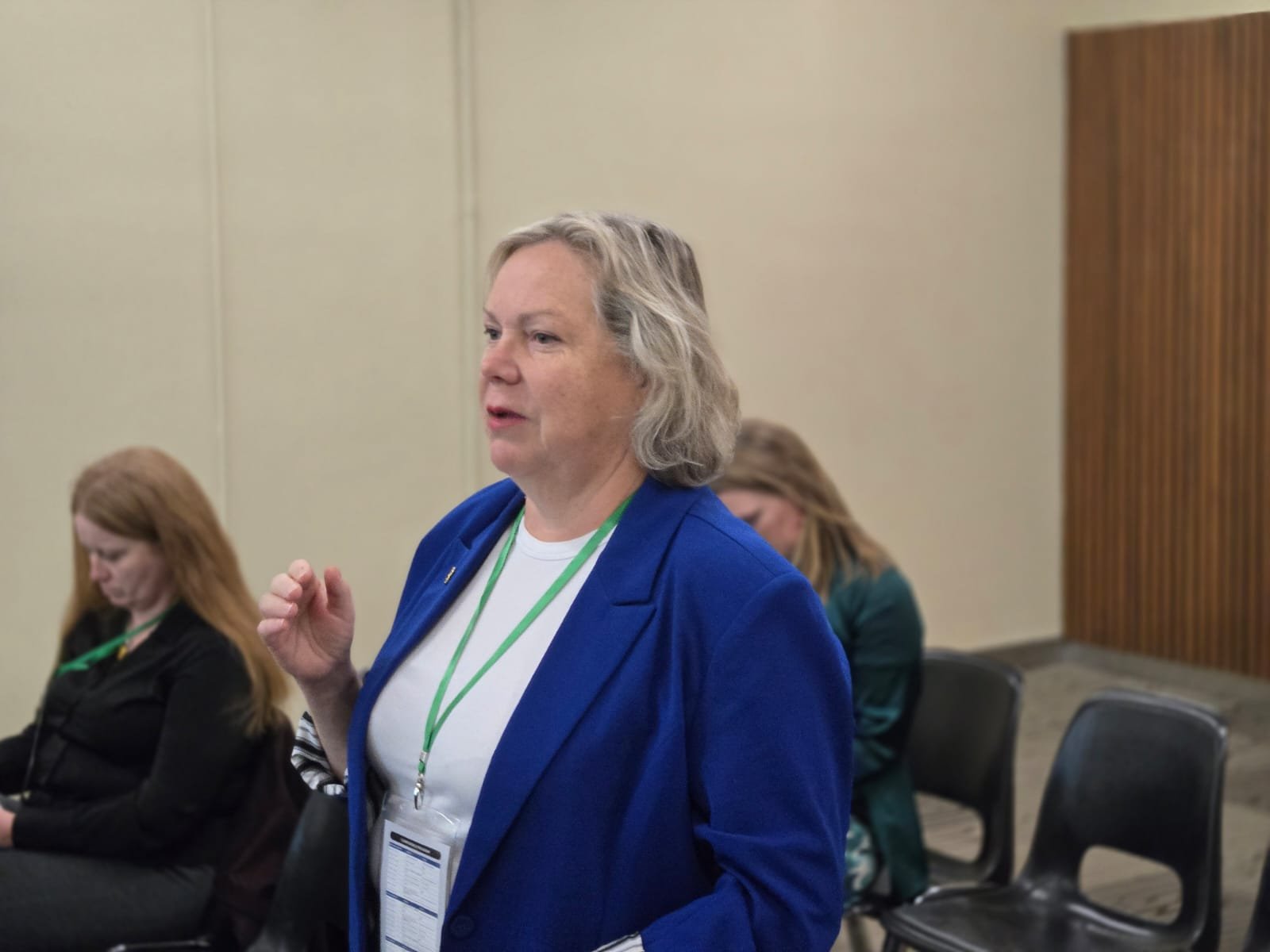
Moments from the Morning Sessions

The morning sessions at the 1st International Conference on Canadian Agri-food & Rural Advisory, Extension, and Education (CAREE) at the […]
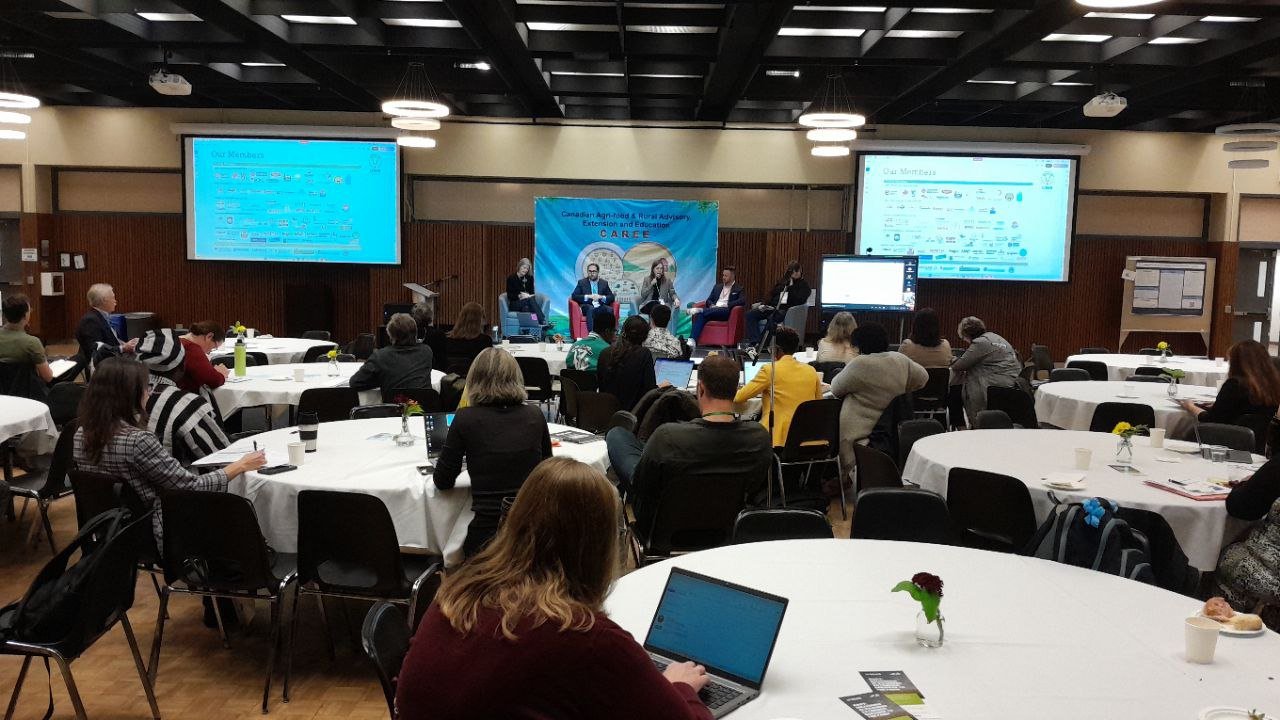
Stronger Together for Sustainability

Meaningful conversations unfolded during Parallel Session IV at the 1st International Conference on Canadian Agri-food & Rural Advisory, Extension, and […]
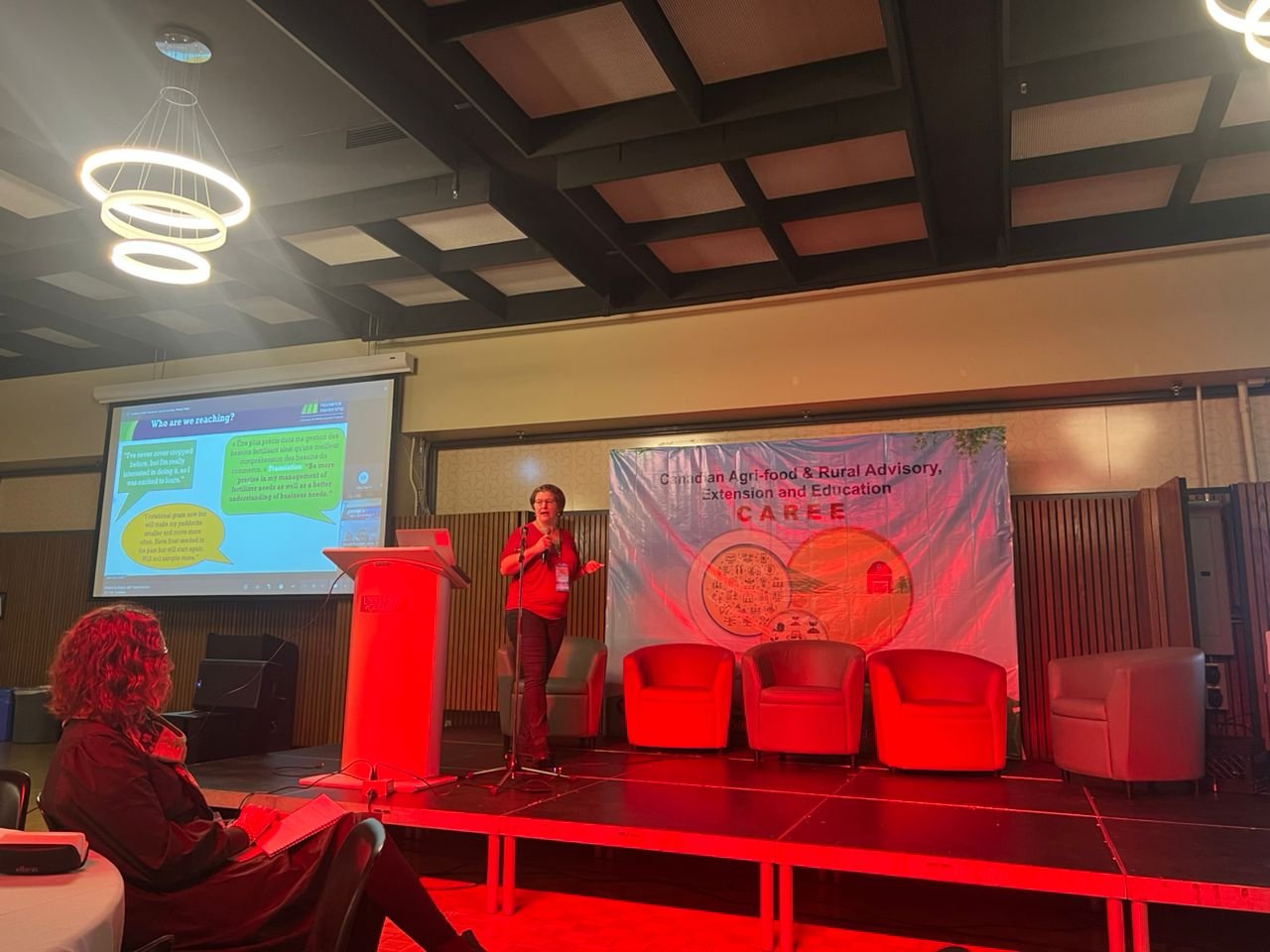
Building Resilience: Insights from CAREE 2025 Session III

Exciting discussions at Abstract Session III-D during the 1st International Conference on Canadian Agri-food & Rural Advisory, Extension, and Education […]
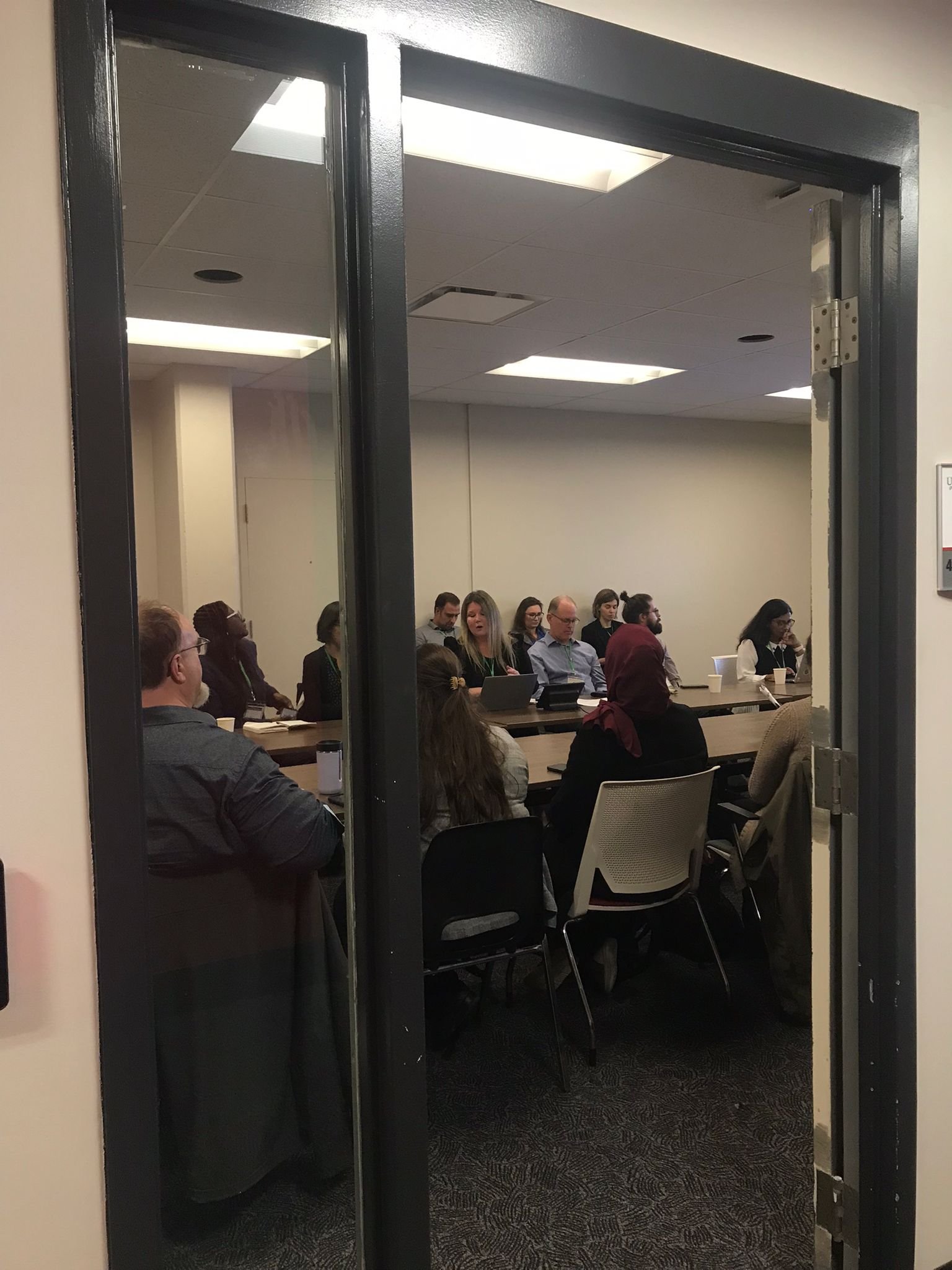
Empowering Farm Business Success: A Roundtable with Heather Watson

In a room filled with energy and ideas, Heather Watson led a lively 60-minute roundtable on “Empowering Farm Business Success: […]
Scroll to Top